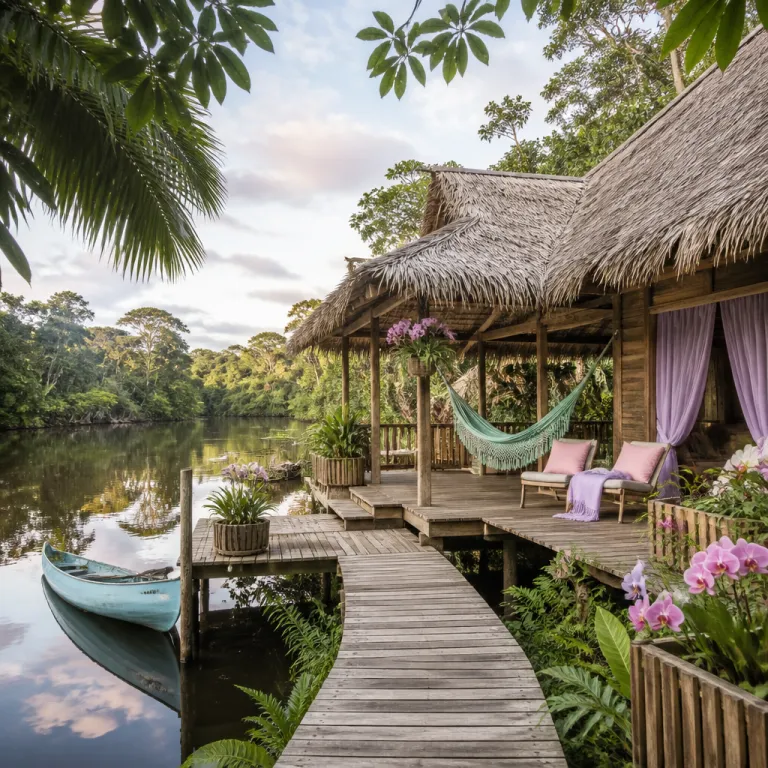
Why Napo Wildlife Center lodge defines luxury in the Ecuadorian Amazon
Napo Wildlife Center lodge sits deep in the Ecuadorian Amazon, offering rare comfort in the middle of pristine rainforest. This eco lodge is owned and operated by the Kichwa Añangu community, so every stay supports an indigenous community that protects both wildlife and culture. The result is a refined rainforest experience where premium tour services meet authentic Amazon traditions.
The lodge lies inside Yasuní National Park, one of the most biodiverse national park areas on the planet. Guests arrive by flying to Coca, then continuing by motorboat and canoe along the Napo River, entering the heart Yasuní region where engines fall silent and wildlife sounds take over. This carefully managed access route keeps the surrounding Amazon rainforest undisturbed, which is why so many wildlife species still thrive here.
As a luxury traveler, you will notice how the wildlife center balances comfort with sustainability from the moment you arrive. Solar power, low impact construction, and strict waste management are standard, yet suites still offer hot water, quality linens, and private balconies facing the lagoon. This balance is what makes Napo Wildlife Center lodge a unique benchmark for premium tour experiences in the wider Ecuadorian Amazon.
The Kichwa Añangu community has developed the center as a long term conservation project rather than a short term tourism venture. Their expert guides are community members trained in both modern naturalist methods and ancestral knowledge of the Amazon rainforest. This dual expertise gives every wildlife tour, canoe outing, and forest walk a depth that conventional rainforest experience products rarely match.
For travelers comparing luxury stays across the Amazon, Napo Wildlife Center lodge stands apart because of its community ownership model. While other eco lodge properties may lease land, here the Kichwa Añangu people directly manage operations and reinvest revenue into education, healthcare, and forest protection. That structure gives your travel spending a measurable conservation impact, not just a symbolic one, while keeping decision making in the hands of the Añangu community.
Planning your itinerary: ideal days and nights in Yasuní National Park
Most guests plan an itinerary of four or five days and nights at Napo Wildlife Center lodge, which allows time to adjust to the rainforest and still enjoy unhurried excursions. Shorter stays of three days and two nights can work for busy travelers, but you will inevitably skip content such as longer canoe routes or extended birding tour sessions at dawn. For serious nature lovers, stretching the itinerary to six days and five nights offers the most complete rainforest experience.
Each day at the wildlife center follows a rhythm shaped by wildlife behavior rather than by city schedules. Early mornings focus on bird species activity, with expert guides leading small groups to observation towers or clay lick sites where parrots and macaws gather. Afternoons often bring slower canoe tours through flooded forest channels, while some nights include optional walks to observe nocturnal wildlife along carefully marked trails.
When planning your travel dates, consider both rainfall and river levels in the Ecuadorian Amazon. High water seasons allow canoes to reach deeper into the Amazon rainforest, while lower water periods can concentrate wildlife along remaining channels and clay lick areas. For a detailed comparison of seasonal pros and cons for a luxury rainforest experience, consult this guide to the best time to visit the Amazon for an upscale stay.
Families often choose a slower pace, building in free days and quieter nights at the lodge to balance more active tour days. Photographers, by contrast, tend to request customized itinerary options that maximize time at observation towers and along the Napo River at sunrise and sunset. Whatever your style, communicate your priorities in advance so the Kichwa Añangu team can align expert guides and boat schedules with your preferred rhythm.
Remember that travel to the center involves a full day each way between Quito and the lodge, including the flight to Coca and the river journey along the Napo. Factor those days and nights into your overall Ecuadorian Amazon plan, especially if you are combining Napo Wildlife Center lodge with other national park destinations elsewhere in the region. A well structured itinerary will leave you rested enough to appreciate every sound, scent, and color of Yasuní National Park.
Signature rainforest experiences: from clay licks to canopy observation towers
The most iconic experience at Napo Wildlife Center lodge is the visit to the parrot clay lick, where hundreds of birds gather to feed on mineral rich clay. Expert guides time these outings carefully, adjusting the tour schedule to weather and wildlife behavior so guests have the best chance to see multiple bird species in one sitting. Watching the clay lick come alive at dawn is a defining moment of any stay in the Ecuadorian Amazon.
Equally memorable are the canopy level observation towers, which rise above the rainforest canopy and offer sweeping views over Yasuní National Park. From these platforms, guests often spot monkeys, toucans, and raptors, while the expert guides interpret complex wildlife interactions unfolding in the treetops. Because the towers are located within the heart Yasuní zone, the density of wildlife sightings can be remarkable during both mornings and late afternoons.
For birding tour enthusiasts, the combination of clay lick visits and time on the observation towers creates a powerful checklist opportunity. The wildlife center reports around 600 bird species in the surrounding area, based on surveys published in the mid 2010s by researchers working in Yasuní National Park, making this one of the richest birding locations in the entire Amazon rainforest. Serious birders often design a premium tour focused almost entirely on avian life, extending their days and nights to cover different habitats around the Napo River and adjacent forest.
Beyond birds, guided canoe excursions reveal another side of the rainforest experience, gliding silently through blackwater creeks where giant otters, caimans, and monkeys appear along the banks. These low impact tours highlight how the Kichwa Añangu community has chosen paddles over engines inside the core conservation zone, reducing noise and disturbance for sensitive wildlife. Guests frequently comment that these quiet hours on the water become the most meditative part of their travel story.
If you are comparing different rainforest adventures across South America, you might look at other protected areas such as the Bolivian reserve highlighted in this overview of Madidi National Park luxury stays. Yet even in that context, Napo Wildlife Center lodge remains unique because it combines world class wildlife viewing, community ownership, and high comfort standards within a single Yasuní National setting. That combination is rare in the broader Amazon region and is a key reason many travelers rate this lodge as a once in a lifetime destination.
Community, culture, and conservation: how your stay supports the Kichwa Añangu
Every guest night at Napo Wildlife Center lodge directly supports the Kichwa Añangu community, which owns and manages the entire project. Revenue from each premium tour is reinvested into local schools, healthcare, and conservation programs that keep the surrounding Amazon rainforest intact. This model turns your travel budget into a tangible contribution to both people and nature.
The Kichwa Añangu have lived along the Napo River for generations, and their intimate knowledge of wildlife and forest cycles shapes every itinerary. When expert guides explain animal tracks, medicinal plants, or seasonal changes, they are sharing both scientific information and ancestral memory. One Añangu guide describes it simply: “We grew up listening to this forest. When we walk with you, we are introducing you to an old friend.” That blend of perspectives gives guests a deeper understanding of what it means to live in the heart Yasuní region year round.
During your stay, you may visit the community itself to learn about traditional agriculture, handicrafts, and daily life in this part of the Ecuadorian Amazon. These encounters are carefully structured to respect privacy and dignity, avoiding the staged performances sometimes seen in less ethical tourism operations. Instead, you gain a grounded sense of how the wildlife center and the Añangu community function as a single, interdependent system.
The lodge’s sustainability practices go beyond marketing language and into measurable action. Solar panels power much of the eco lodge infrastructure, while strict waste policies minimize pollution in nearby creeks and wetlands. As the operators explain in their own words, “Is the lodge eco-friendly? Yes, it uses solar power and sustainable practices.”
For travelers who value responsible luxury, this level of transparency builds trust and long term loyalty. You are not just booking a room in a remote lodge; you are entering a partnership with the Kichwa Añangu people to safeguard a critical section of Yasuní National Park. That partnership is one of the most compelling reasons to choose Napo Wildlife Center lodge over more conventional rainforest properties, even if access is more complex and prices reflect the remote location and community based model.
Practical travel advice for a seamless luxury stay in the Amazon rainforest
Reaching Napo Wildlife Center lodge involves several stages, but each step is well coordinated for guests. The standard route is to fly from Quito to Coca, then board a motorboat along the Napo River before transferring to a paddle canoe for the final stretch into the wildlife center. This layered journey feels like a gradual immersion into the Amazon rainforest, with noise and infrastructure fading as nature takes over.
To stay comfortable in the humid climate, pack light, quick dry clothing that can be layered for cooler nights and early mornings. Long sleeves and trousers help protect against insects, while a breathable rain jacket is essential for sudden showers that define life in the Ecuadorian Amazon. Do not forget high quality insect repellent, a wide brimmed hat, and closed shoes suitable for rainforest trails and canoe landings.
Luxury travelers sometimes worry that an eco lodge means sacrificing comfort, but Napo Wildlife Center lodge is designed to ease that concern. Rooms offer private bathrooms with hot water, ceiling fans, and screened windows that keep wildlife outside while letting rainforest sounds drift in. Public areas include a well appointed dining room and lounge where you can relax between tour activities and compare wildlife sightings with other guests.
Respect for local customs is essential when visiting the Añangu community and interacting with Kichwa Añangu hosts. Simple gestures such as asking before taking photos, dressing modestly during community visits, and listening more than speaking go a long way toward building mutual respect. Remember that you are a guest in both a national park and an indigenous territory, so your behavior contributes to the long term success of this community based model.
If you are combining Napo Wildlife Center lodge with other Amazon gateways, consider spending a night in a regional city with its own luxury scene. This overview of Belém as a gateway to the jungle shows how some travelers pair urban comfort with deep rainforest immersion. Planning your days and nights across both city and forest can create a richer overall itinerary without diluting your core rainforest experience.
Choosing the right tours and experiences at Napo Wildlife Center lodge
Once you arrive at Napo Wildlife Center lodge, you will choose from a curated menu of tours designed to showcase different aspects of Yasuní National Park. Standard packages include a balanced mix of canoe outings, forest walks, clay lick visits, and time on observation towers, all led by expert guides from the Kichwa Añangu community. These experiences are structured so that even a four day stay feels full yet never rushed.
Wildlife focused travelers often request extra time in habitats known for specific species, such as oxbow lakes favored by giant otters or canopy routes rich in bird species diversity. The wildlife center team can adjust departure times, group sizes, and even days and nights allocation to match your priorities, within the limits of park regulations. This flexibility is one of the advantages of staying at a community owned eco lodge with deep local staffing.
Birding tour guests usually start before sunrise, heading straight to key vantage points where parrots, macaws, and raptors are most active. Because the surrounding Ecuadorian Amazon holds hundreds of recorded bird species, every outing offers a chance to add new sightings to your personal list. Many guests leave with a renewed appreciation for how fragile and interconnected these Amazon rainforest ecosystems are.
For couples or families seeking a more relaxed premium tour, the lodge can emphasize slower paced canoe rides, cultural visits to the Añangu community, and evenings on the deck listening to the forest. These softer experiences still provide rich nature immersion, but with more time to rest in your room and enjoy the comforts of the lodge itself. It is entirely possible to have a world class rainforest experience without chasing every possible wildlife sighting.
Whatever combination of tours you choose, remember that your presence supports both conservation and community development in this part of Yasuní National. By staying at Napo Wildlife Center lodge, you help protect a critical section of national park territory while sustaining the livelihoods of the Kichwa Añangu people. That dual impact is what makes this center a model for future luxury travel in the wider Amazon basin.
Key figures and conservation statistics for Napo Wildlife Center lodge
- Napo Wildlife Center reports around 600 recorded bird species in its surrounding area, placing this section of the Ecuadorian Amazon among the most diverse birding destinations in South America. This figure is based on ornithological surveys carried out in and around Yasuní National Park in the mid 2010s.
- Researchers working with the wildlife center have identified approximately 169 mammal species in the broader Yasuní National Park region, based on studies from the early 2010s, highlighting the importance of this national park for large scale conservation.
- The Kichwa Añangu community manages thousands of hectares of Amazon rainforest around the lodge, creating a de facto private reserve that complements formal Yasuní National protections.
- Solar power systems at the eco lodge significantly reduce diesel consumption compared with conventional jungle hotels, lowering emissions while maintaining reliable energy for guests.
- Guided tours are capped at small group sizes to minimize disturbance, which improves wildlife viewing quality and aligns with long term conservation goals for the heart Yasuní landscape.
FAQ: planning your stay at Napo Wildlife Center lodge
How do I reach Napo Wildlife Center lodge from Quito ?
Most travelers fly from Quito to the town of Coca, a journey of around 30 minutes by air. From Coca, lodge staff escort you along the Napo River by motorboat, then transfer you to a paddle canoe for the final, quieter stretch into the wildlife center. This combined route takes most of the day, so plan your itinerary with at least one full travel day in each direction.
What wildlife can I expect to see during my stay ?
Guests regularly observe monkeys, parrots, and giant otters during canoe tours and forest walks around the lodge. The nearby clay lick attracts large numbers of parrots and macaws, while observation towers offer chances to see toucans, raptors, and other bird species at canopy level. Sightings always depend on weather and luck, but the biodiversity of Yasuní National Park gives you excellent odds of memorable encounters.
Is Napo Wildlife Center lodge truly eco friendly for a luxury property ?
Yes, the lodge was designed from the outset as an eco lodge operated by the Kichwa Añangu community. It uses solar power, low impact construction, and strict waste management to reduce its footprint in the Amazon rainforest. These measures allow the property to offer a premium tour experience while still aligning with conservation goals for the Ecuadorian Amazon.
How many days and nights should I stay for a complete experience ?
An itinerary of four days and three nights is generally considered the minimum for a satisfying rainforest experience at Napo Wildlife Center lodge. Many travelers choose five days and four nights to allow extra time for birding tour activities, clay lick visits, and cultural encounters with the Añangu community. Shorter stays are possible but may require you to skip content such as longer canoe routes or additional wildlife excursions.
What should I pack for a comfortable stay in the Amazon rainforest ?
Pack light, quick dry clothing, including long sleeves and trousers for insect protection, plus a breathable rain jacket for sudden showers. Bring high quality insect repellent, a hat, sunscreen, and closed shoes suitable for rainforest trails and canoe landings. A pair of binoculars will greatly enhance your wildlife viewing, especially from observation towers and during early morning tours.