Discover what luxury really means in a Brazilian Amazon rainforest hotel, from eco lodges near Manaus and Anavilhanas to remote reserves like Cristalino, plus wildlife, activities, health tips and how long to stay.
Why choose a hotel in the Brazilian Amazon rainforest
Dense green walls of forest close in as your boat leaves Manaus and heads up the Rio Negro. Within an hour, the city noise disappears and the soundscape shifts to cicadas, distant howler monkeys and the soft slap of water against the hull. Staying in a hotel in the Brazilian Amazon rainforest is not a simple “place to sleep” decision; it is a decision about how close you want to be to this intensity.
The region suits travellers who value experience over display. Luxury here is not marble lobbies but a well-designed jungle lodge with screened verandas, powerful air conditioning in your suites when the humidity peaks, and a guide who can read the forest like a book. If you are looking for nightlife, shopping or a classic resort atmosphere, this will feel too remote. If you want to wake up to mist over the river and the possibility of pink dolphins surfacing below your deck, you are in the right place.
Most high-end rainforest lodges in the Brazilian Amazon operate as all-inclusive bases for exploration. You arrive by boat or small plane, stay several days, and follow a rhythm of early-morning wildlife outings, long lunches, siestas and night excursions. The best luxury properties balance comfort with a light footprint, functioning as eco lodges that support conservation and local communities rather than overwhelming the forest around them.
Key regions in the Brazilian Amazon for luxury stays
Boats leaving the port area near Manaus, around Road BR-319, fan out in three main directions that matter for hotel choice. One cluster of jungle lodges lies along the Rio Negro, including properties facing the Anavilhanas jungle archipelago, a labyrinth of forested islands and blackwater channels. This area is ideal if you want easy access from Manaus yet a strong sense of immersion, with dark, tannin-rich water that keeps mosquitoes relatively low compared with muddier tributaries.
Farther afield, lodges deep in the southern Brazilian Amazon sit near protected areas and private reserves of thousands of hectares. Around the Cristalino region, for instance, rainforest lodges are surrounded by continuous forest where you can spend days exploring canopy towers, oxbow lakes and terra firme trails without seeing another group. These locations suit travellers who prioritise wildlife and birdwatching over quick logistics.
On the western side of the basin, some itineraries combine Brazil with neighbouring Peru or Ecuador, using flights between Iquitos, Coca and Manaus to stitch together different sections of the Amazon river system. If you are tempted by names you may have heard elsewhere, such as Sacha Lodge in Ecuador or lodges along the Peruvian Amazon, remember that these are in different countries and ecosystems. For a first stay focused on Brazil, it is usually wiser to choose one region and go deeper rather than hop between distant rainforest zones.
What “luxury” really means in an Amazon lodge
Polished wood walkways raised above the forest floor, ceiling fans turning lazily over a king bed, and a wall of screened windows open to the canopy; this is the vocabulary of luxury Amazon stays. The top rainforest lodges in Brazil offer spacious suites or bungalows with proper mattresses, hot showers, and reliable air conditioning that lets you sleep well even when the forest steams after rain. Some add small plunge pools, but the real indulgence is privacy and silence.
Service tends to be attentive but relaxed. You are more likely to be greeted by a naturalist in field clothes than by a doorman in a blazer, and that is a good sign. The best luxury Amazon lodges invest in highly trained guides and boat pilots, not in chandeliers. They will plan your days around the light and the tides, adjusting departure times so you are on the river when the macaws fly or in the forest when monkeys are most active.
In a few areas, such as the private reserve around Cristalino, the sense of refinement extends to architecture and conservation. Here, the lodge offers minimalist design, open-sided lounges and a library where you can learn about the work of the Cristalino Foundation, which supports environmental education and research in the surrounding 11,399-hectare reserve according to its published figures. This is luxury as stewardship; your stay directly underpins the protection of the forest you came to see.
Wildlife, activities and how many days you really need
Early morning on a side channel of the Amazon river, the light is soft and the forest still half asleep. A caiman slides off a sandbank, a pair of macaws crosses overhead, and your guide quietly points out a sloth curled in the canopy. This is the rhythm of days in a Brazilian Amazon lodge: slow, observant, surprisingly structured. You are not here to tick off attractions but to let the forest reveal itself in layers.
Most high-end jungle lodges follow a similar pattern of activities. Expect guided boat excursions at dawn and late afternoon, forest walks on well-marked trails, and night outings to search for nocturnal wildlife. In the Anavilhanas jungle region, blackwater channels are ideal for silent canoe trips, while in southern reserves like Cristalino, canopy towers offer sunrise views over an endless green carpet. You might spend one day tracking monkeys and another learning to identify frog calls after dark.
For a meaningful experience, plan at least three nights, ideally four or five. Shorter stays leave you rushing between outings and reduce your chances of seeing more elusive wildlife. Longer visits allow you to vary the pace: one intense day of hiking, another focused on boat-based birdwatching, perhaps a quiet afternoon simply watching the forest from a hammock. The Amazon rainforest rewards patience; the more days you give it, the more it will give back.
Comparing lodge styles: eco, adventure and refined comfort
Not all Amazon lodges are built with the same traveller in mind. Some lean into the “expedition” feel, with simpler rooms, cold-water showers and a focus on long days in the field. Others position themselves as refined eco lodges, with carefully designed suites, curated menus and a strong conservation narrative. Understanding where you sit on that spectrum is essential before you book a hotel in the Brazilian Amazon rainforest.
Eco-focused properties often sit inside or adjacent to protected areas such as a national park or private reserve. They tend to use low-impact construction, solar power where possible and strict limits on group size. In places like the Cristalino region, the link between the lodge and conservation work is explicit through organisations such as the Cristalino Foundation, which reports on its environmental education and research projects in the area. Choose this style if you want to learn about forest ecology as much as you want to photograph it.
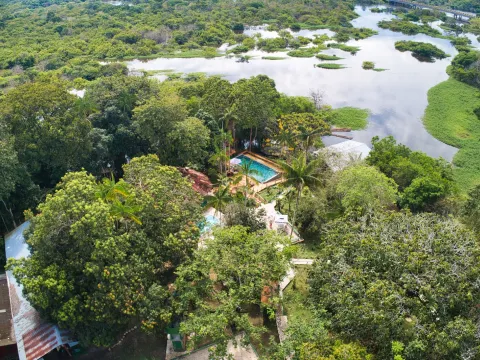
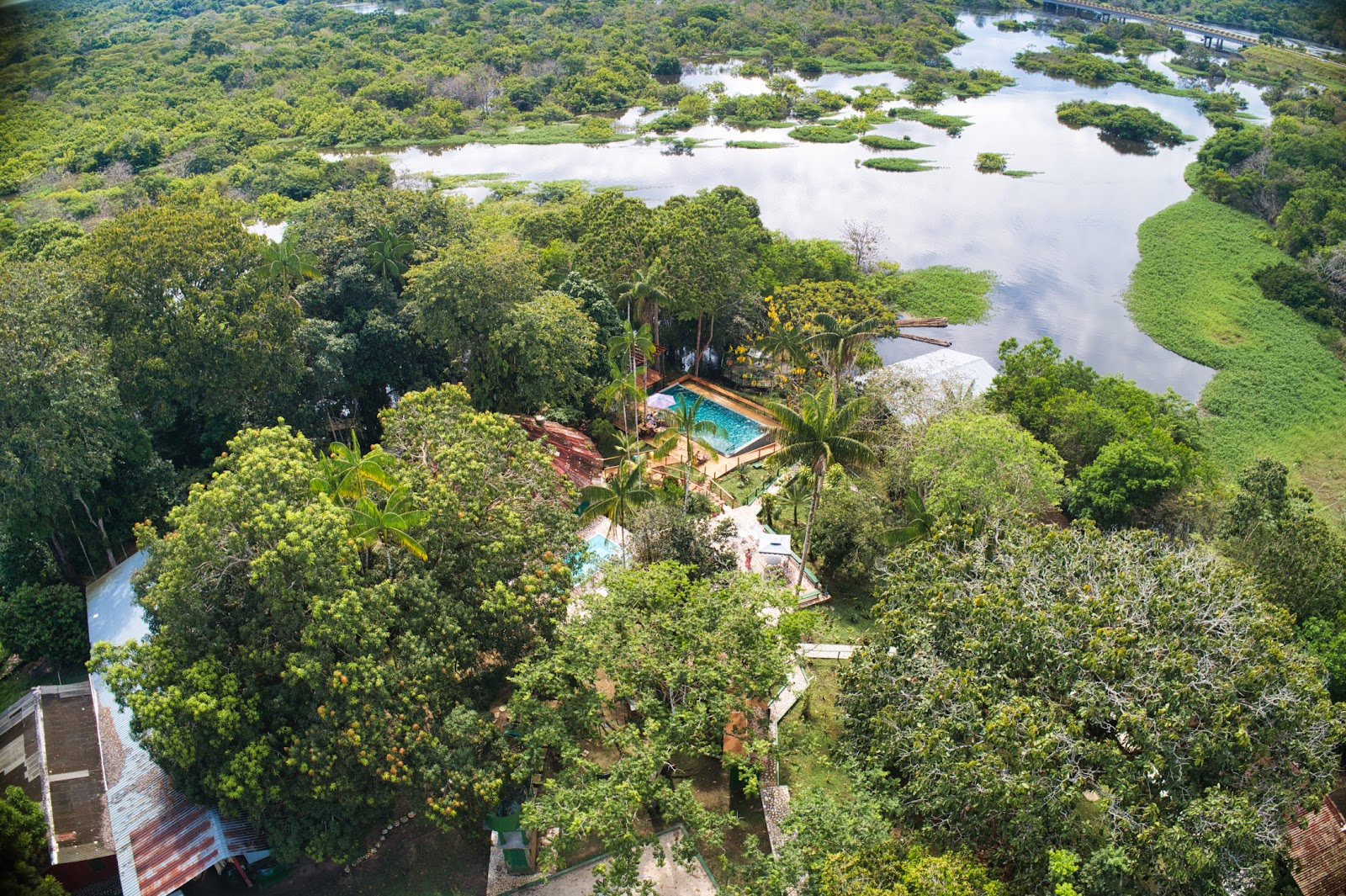
More comfort-driven jungle lodges, including those near the Anavilhanas archipelago on the Rio Negro, emphasise ease. Think air-conditioned rooms, a pool overlooking the river, and flexible activity schedules that allow for more downtime. These can be ideal for couples or families who want the Amazon experience without feeling they are on a hardcore expedition. The trade-off is that you may be slightly closer to other lodges and boat traffic, with a touch less sense of utter remoteness than in the deepest forest.
Practical expectations: climate, comfort and health
Humidity is the first thing you notice when you step off the boat. Clothes dry slowly, hair frizzes, camera lenses fog. A good rainforest lodge anticipates this, with powerful fans, efficient air conditioning in the rooms and covered walkways that keep you dry during sudden downpours. Pack light, quick-drying fabrics and accept that “perfectly pressed” is not part of the dress code here.
The climate shapes your daily rhythm. Early mornings and late afternoons are cooler and better for wildlife, while midday is for long lunches and rest. Even in luxury Amazon properties, you will spend hours outdoors on boats or trails, so comfortable footwear, a hat and breathable long sleeves matter more than formal outfits. Expect some insects, some mud, and the occasional frog on your veranda; they are part of the forest, not a sign of poor maintenance.
Health-wise, the Amazon rainforest requires preparation. You should discuss vaccinations and malaria prevention with a medical professional well before travel, using guidance from sources such as the World Health Organization or national travel-medicine centres, especially if you plan to combine Brazil with Peru or Ecuador, where risk profiles can differ. Lodges will brief you on safety guidelines, from wearing lifejackets on boats to staying with your guide on night walks. Follow them. The best luxury Amazon lodges pair adventure with a strong safety culture, so you can focus on the experience rather than the logistics.
Who a Brazilian Amazon hotel suits best – and who should look elsewhere
Travellers who thrive in the Brazilian Amazon tend to share a few traits. They are curious, patient, and comfortable trading urban convenience for sensory overload: the smell of wet earth after rain, the chorus of insects at dusk, the sight of monkeys crossing a river gap in a single effortless leap. If you read field guides for pleasure or find yourself lingering over maps of the Amazon river and its tributaries, a rainforest lodge will feel like a dream made real.
Families with older children often do well here, especially in lodges that offer flexible programmes and comfortable suites where everyone can rest between outings. Couples looking for a different kind of luxury, one measured in starlight and silence rather than champagne labels, will also find the Brazilian Amazon compelling. For them, the best luxury choice is usually a property that balances refined design with strong guiding, rather than the most remote option at all costs.
On the other hand, if you dislike heat, insects or boat travel, or if you need constant urban stimulation, you may be happier in coastal Brazil or in Andean cities in Peru and Ecuador, adding the Amazon as a short, carefully chosen side trip rather than the core of your journey. A hotel in the Brazilian Amazon rainforest is not a generic resort; it is a commitment to being present in one of the planet’s most complex ecosystems. Make that choice knowingly, and the forest will reward you.
Is a hotel in the Brazilian Amazon rainforest a good choice for my trip?
Choosing a hotel in the Brazilian Amazon rainforest is a strong choice if you value immersive nature, guided wildlife experiences and a sense of remoteness more than classic urban comforts. Luxury here means well-designed jungle lodges with comfortable rooms, air conditioning, expert guides and access to pristine forest or river systems, rather than extensive nightlife or shopping. It suits curious, reasonably active travellers who are willing to accept heat, humidity and some insects in exchange for close encounters with wildlife and the chance to learn about one of the world’s richest ecosystems. If that trade-off appeals to you, a Brazilian Amazon lodge will likely be a highlight of your journey.
What is the best time to visit the Brazilian Amazon rainforest?
The most rewarding time to visit the Brazilian Amazon rainforest is generally during the drier months from June to November, when rainfall is lower and wildlife viewing can be easier along exposed riverbanks and forest trails. Water levels are also more stable, which helps with boat access to smaller channels. That said, the forest remains humid and green year-round, and the high-water season offers striking flooded-forest scenery and canoeing among submerged trees. Your choice should depend on whether you prioritise easier hiking and wildlife spotting (drier months) or dramatic river landscapes and more boat-based exploration (higher-water months).
How many days should I stay in an Amazon lodge?
A stay of at least three nights in an Amazon lodge is recommended to experience the rhythm of the forest without feeling rushed, with four or five nights offering a deeper immersion. The first day is often lost to travel and orientation, while subsequent days follow a pattern of early-morning and late-afternoon excursions with rest in between. Longer stays increase your chances of seeing a wider range of wildlife, from monkeys and sloths to river dolphins and nocturnal species on night outings. Very short visits of one or two nights rarely do justice to the scale and complexity of the Amazon rainforest.
What activities can I expect at a luxury Amazon rainforest lodge?
Luxury Amazon rainforest lodges typically offer a curated programme of guided boat trips, forest walks and wildlife observation tailored to the local environment. You can expect dawn and dusk excursions on rivers or blackwater channels, hikes on marked trails to look for birds, monkeys and medicinal plants, and night outings to search for caimans, frogs and nocturnal mammals. Some lodges near protected areas or private reserves include canopy towers, visits to conservation projects, or opportunities to learn about local communities and their relationship with the forest. Activities are usually included in your stay and adjusted daily according to weather, water levels and wildlife movements.
Are there health and safety concerns when staying in the Amazon?
Visiting the Amazon rainforest involves specific health and safety considerations, but reputable lodges manage them carefully. Travellers should consult a medical professional before departure about recommended vaccinations and malaria prevention, especially if combining Brazil with other Amazon countries such as Peru or Ecuador. On site, you will receive safety briefings covering lifejacket use, behaviour on boats, and staying with your guide on forest and night walks. Insects, heat and humidity are constant factors, so protective clothing, repellent and good hydration are essential. Choosing an established lodge with experienced guides and clear safety protocols significantly reduces risk and allows you to focus on the experience.