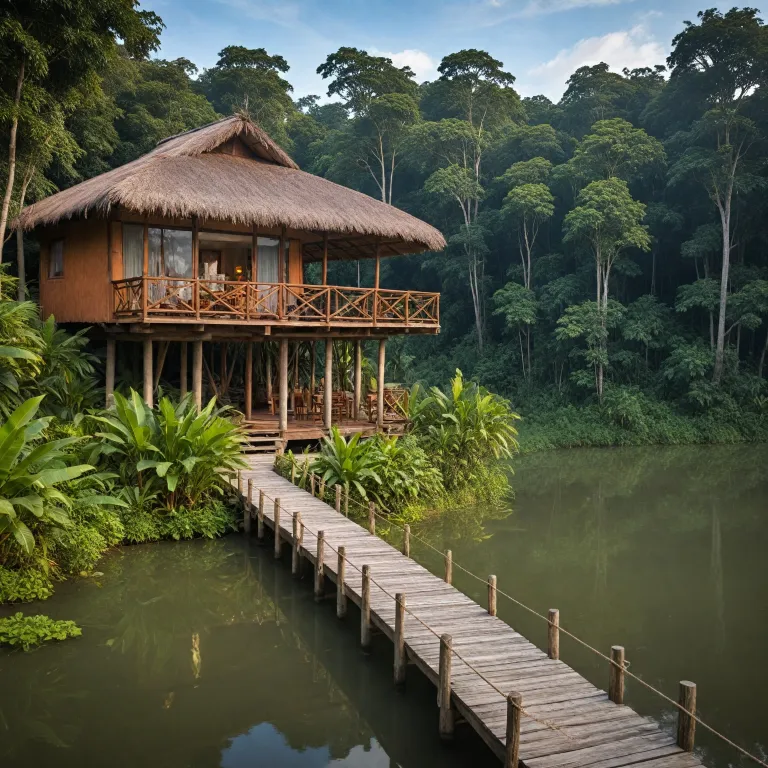
Luxury stays in the Peruvian rainforest along the Amazon river
The Peruvian rainforest offers a rare blend of refined comfort and raw wilderness. Luxury travellers can sail the Amazon river in style, then retreat to an elevated lodge where glass walls frame endless jungle canopy. This combination of immersive nature and curated service defines the modern premium stay in this remote region of Peru.
Most high end properties in the Peruvian Amazon cluster around Iquitos, Puerto Maldonado, and the Manu region. From these gateways, guests reach secluded rainforest lodges by boat along blackwater tributaries or by short overland transfers through dense jungle. Each stay feels unique because the surrounding wildlife, water levels, and light conditions shift subtly every day.
When you visit the Peruvian jungle, you enter one of South America’s richest biodiversity hotspots. The wider Amazon rainforest in Peru shelters thousands of plant and animal species, many still undocumented by science. This is why environmental NGOs, the Peruvian Government, and Indigenous Communities work together to regulate tourism and protect fragile national park and national reserve areas.
Premium booking platforms now highlight properties that support indigenous communities and respect protected zones. Guests can filter for lodges operating inside or adjacent to areas such as Pacaya Samiria, Tambopata National Reserve, and the Manu National Park corridor. Choosing these options helps reduce pressure on deforested frontiers and reinforces conservation incentives for local partners.
For travellers comparing destinations, the Peruvian Amazon stands out for its combination of river based exploration, cultural depth, and easy pairing with Cusco or Machu Picchu. You can walk a canopy bridge at sunrise, then fly to Cusco to join the Inca Trail or a Sacred Valley itinerary. This fluid connection between rainforest and high Andes makes planning a multi region stay particularly rewarding.
Choosing the right Peruvian Amazon region for your luxury lodge
Selecting the ideal region in the Peruvian Amazon is the first strategic decision for a luxury stay. Around Iquitos, the Amazon river is broad and powerful, with low water and high water season changes that dramatically reshape the landscape. Further south near Puerto Maldonado and the Tambopata National Reserve, oxbow lakes and clay licks create different wildlife viewing opportunities.
Travellers focused on river journeys often favour itineraries near Iquitos, where elegant riverboats and remote lodge properties line the Amazon and its tributaries. Here, the Pacaya Samiria National Reserve protects flooded rainforest that teems with aquatic species and rare wildlife. In contrast, the Manu region and Manu National Park offer a gradient from Andean cloud forest down into lowland jungle, ideal for guests who value varied ecosystems.
The best time to visit each region depends on your priorities and tolerance for heat, humidity, and rain. Many travellers choose the dry season for easier trail access and fewer insects, yet the high water season can provide superior canoe access into flooded forest. When planning the time to visit, discuss low water and high water season trade offs with your lodge or specialist agent.
Well curated booking websites now provide detailed region by region comparisons, including maps of national park and national reserve boundaries. Some platforms also highlight spa focused rainforest retreats; for example, you can review options that offer elevated spa experiences for discerning travellers via this guide on luxury spa stays in the Amazon rainforest. These tools help you align your stay with conservation priorities and personal comfort expectations.
Whichever region you choose, verify that your lodge operates legally within Peru’s regulatory framework and respects indigenous territories. Responsible operators collaborate with Indigenous Communities on land use, guiding, and cultural activities, ensuring that tourism revenue supports long term rainforest protection. This alignment between guest expectations and local stewardship is central to a truly premium Peruvian rainforest experience.
Understanding seasons, water levels, and the best time to visit
Seasonality in the Peruvian rainforest shapes everything from wildlife sightings to transfer logistics. The classic dry season generally brings lower rainfall, firmer jungle trails, and slightly cooler nights, which many guests find more comfortable. However, the Amazon river and its tributaries still respond to rainfall across a vast South America catchment, so water levels can vary significantly.
During the high water season, boats can navigate deeper into flooded forest, allowing close access to canopy species and hidden creeks. In contrast, the low water season exposes sandy river beaches and concentrates wildlife along remaining channels and oxbow lakes. Both water season phases offer unique photographic opportunities, so the best time to visit depends on your personal interests.
Luxury lodges near Iquitos, Puerto Maldonado, and Manu adjust their activity programs according to water levels. In some months, you may glide silently by canoe through partially submerged rainforest, while in others you follow elevated boardwalks or firm forest trails. When you plan the time to visit, ask how your chosen lodge adapts excursions to low water and high water season conditions.
Well designed booking platforms explain these nuances clearly, helping guests avoid unrealistic expectations. Some sites also highlight wellness focused properties that tailor spa rituals to seasonal rhythms; you can explore how premium rainforest retreats elevate your stay with bespoke spa experiences through this article on bespoke spa experiences in the Amazon rainforest. Transparent information about climate, river dynamics, and activity planning is a hallmark of trustworthy, guest centric platforms.
When comparing options, look for lodges that monitor environmental conditions closely and communicate clearly before your arrival. This is particularly important in remote national park and national reserve zones, where sudden weather shifts can affect flight schedules or river navigation. A premium stay in the Peruvian Amazon should balance adventure with meticulous safety and comfort planning.
Wildlife, Indigenous Communities, and conservation focused luxury
The Peruvian Amazon is home to extraordinary wildlife, from pink river dolphins to macaws and elusive jungle cats. Yet deforestation, illegal mining, and logging threaten many species and degrade water quality across key regions. Travellers choosing a luxury lodge can directly influence whether tourism supports or undermines rainforest conservation.
In areas such as Pacaya Samiria, Manu National Park, and Tambopata National Reserve, strict rules govern visitor numbers and activity zones. High end lodges operating near these national park and national reserve areas often partner with Indigenous Communities to monitor wildlife and report illegal activities. This collaboration helps protect habitats while offering guests authentic insights into indigenous cultures and traditional knowledge.
When you stay in the Peruvian jungle, ask how your lodge contributes to conservation and community projects. Some properties fund ranger patrols, support Indigenous Peoples’ land rights, or invest in education and healthcare for nearby indigenous communities. Others work with Environmental NGOs and the Peruvian Government to expand satellite monitoring that tracks deforestation and mercury pollution from illegal mining.
Responsible booking websites now highlight lodges that avoid recently deforested zones and respect indigenous territories. In line with expert guidance, travellers are encouraged to follow three core principles : "Avoid deforested areas.", "Support eco-friendly tours.", "Respect indigenous territories." Choosing such operators ensures that your premium stay in the Peruvian rainforest aligns with long term environmental and cultural resilience.
Wildlife focused itineraries often combine dawn boat rides on quiet river channels with night walks in the jungle. Guests may observe rare species such as giant river otters in oxbow lakes near Puerto Maldonado or primate rich canopies in the Manu region. These encounters feel especially meaningful when you know your visit supports the very ecosystems and communities that make them possible.
Pairing the Peruvian rainforest with Cusco, Machu Picchu, and the Inca Trail
Many travellers pair a stay in the Peruvian Amazon with time in Cusco and Machu Picchu. This combination allows you to experience both dense rainforest and high Andean culture within a single, carefully planned itinerary. Premium booking platforms simplify this process by coordinating flights, transfers, and lodge stays across multiple regions of Peru.
From Cusco, guests can join the Inca Trail or alternative trekking routes before or after their rainforest visit. After days of hiking, a river facing lodge in the Peruvian jungle offers restorative comfort, spa treatments, and gentle boat excursions. The contrast between stone terraces at Machu Picchu and the living green walls of the Amazon rainforest creates a powerful narrative of South America’s cultural and natural heritage.
When planning such multi region journeys, consider the best time to visit both highlands and lowlands. The dry season in the Andes often overlaps with comfortable conditions in the rainforest, but shoulder months can also work well. A knowledgeable agent or sophisticated booking website can help you balance time to visit each region, factoring in low water and high water season patterns on the Amazon river.
Some travellers begin in the rainforest near Puerto Maldonado or Manu, then fly to Cusco for acclimatization before tackling the Inca Trail. Others start with cultural immersion in Cusco and the Sacred Valley, then end with a tranquil lodge stay near Iquitos. Either way, ensure that your chosen properties maintain strong environmental credentials and support Indigenous Communities where possible.
For deeper planning, look for online resources that integrate luxury and premium hotel booking with curated experiences. A dedicated guide to personalized tours for discerning travellers in the Amazon rainforest can help you refine your route. This level of detail ensures that every stay, transfer, and guided activity feels seamless and meaningful.
How to evaluate luxury lodges and booking platforms in the Peruvian Amazon
Evaluating a luxury lodge in the Peruvian rainforest requires more than scanning photos of infinity pools. Begin by checking the property’s location relative to national park and national reserve boundaries, as well as known deforestation fronts. Lodges near protected areas such as Pacaya Samiria, Manu, or Tambopata often have stronger incentives to preserve surrounding jungle and river ecosystems.
Next, review how the lodge engages with Indigenous Communities and local staff. Transparent partnerships with Indigenous Peoples, fair employment practices, and community led excursions indicate a commitment to long term regional wellbeing. Booking platforms that highlight these aspects, rather than only room size or spa menus, tend to align better with responsible travel values.
Environmental performance is another key criterion in the Peruvian Amazon, where fragile water systems and peatlands store vast amounts of carbon. Ask how the lodge manages waste, treats water, and minimizes river traffic impacts on wildlife species. Properties that collaborate with Environmental NGOs or follow Peruvian Government guidelines on conservation usually provide clearer, data backed answers.
Guest experience still matters deeply in a premium stay, from cuisine to guiding quality. Look for lodges that limit group sizes, offer flexible daily programs, and employ highly trained naturalist guides familiar with regional wildlife. Reading detailed reviews can help you understand how consistently a property delivers on its promises across different water season conditions.
Finally, assess the booking website itself for clarity, safety information, and honest descriptions of the Peruvian jungle environment. Platforms that explain dry season versus high water dynamics, outline realistic wildlife expectations, and emphasize respect for indigenous territories demonstrate genuine expertise. This combination of comfort, conservation, and candour defines the most trustworthy ways to plan a luxury journey into the Peruvian rainforest.
Key statistics about deforestation and conservation in the Peruvian Amazon
- Forest area lost in the Peruvian Amazon between 2001 and 2018 is estimated at about 2 200 000 hectares, illustrating the scale of pressure on rainforest ecosystems.
- Recent annual deforestation in Peru has been measured at roughly 147 000 hectares, driven largely by agricultural expansion and illegal mining in Amazon regions.
- Peruvian peatlands within the Amazon rainforest are believed to store around 5 000 000 000 metric tons of carbon, making their protection critical for global climate stability.
Essential questions about the Peruvian rainforest, wildlife, and responsible travel
What is the main cause of deforestation in Peru ?
What is the main cause of deforestation in Peru? Agricultural expansion and illegal mining.
How does deforestation affect biodiversity in the Peruvian Amazon ?
How does deforestation affect biodiversity? It leads to habitat loss and species decline.
What measures are being taken to combat deforestation in the Peruvian rainforest ?
What measures are being taken to combat deforestation? Implementation of conservation policies and monitoring.