Reading an amazon rainforest food lodge menu with confidence
Arriving alone at a remote lodge, the first real test often appears at dinner when you open the amazon rainforest food lodge menu and face a cascade of unfamiliar names. The setting may be deep in the jungle, yet the best luxury properties now present menus with the same clarity and structure you expect from an urban five star hotel while still honoring Indigenous culinary traditions. You are not just choosing food, you are choosing how closely you want to engage with the rainforest itself.
Most high end lodges in the Amazon work with Lodge Guests, Local Guides, and Indigenous Communities to shape a menu that balances comfort dishes like grilled chicken with regional specialties built around river fish and forest vegetables. Morning often starts with a buffet where tropical fruit, fresh juice, and warm pão de queijo sit beside bowls of açaí and cupuaçu cream, while lunch and dinner are plated and served at your table with quiet precision. This rhythm allows solo travelers to experiment at their own pace, moving from familiar rice and potatoes toward more adventurous plates featuring tucunaré or pirarucu.
Think of the dinner list at an Amazon jungle lodge as a map of the surrounding rainforest, where each ingredient signals a specific ecosystem, from flooded forest to sandy island beaches. When you see tomatoes, onions, and leafy greens listed in a salad, they usually come from lodge gardens or nearby river communities rather than industrial farms. Even simple grilled fish with tomato and herbs becomes a lesson in sustainable sourcing, because many lodges now highlight whether a species is wild caught under strict quotas or farmed in community run projects.
Pirarucu, tucunaré and the language of Amazonian fish
The most important section of any amazon rainforest food lodge menu is usually the fish list, because the Amazon Basin holds around 3 000 documented fish species, a figure reported in regional ichthyology surveys compiled by Brazilian research institutes such as INPA (Instituto Nacional de Pesquisas da Amazônia) and partner universities. Pirarucu, often described as the world’s largest scaled freshwater fish, appears as thick steaks that are gently grilled or slow roasted, then served with citrus, herbs, and sometimes a side of rice and sautéed vegetables. Its flesh is firm and mild, closer to beef in structure than to delicate white fish, which makes it an excellent entry point for cautious diners.
Tucunaré, also known as peacock bass, is the sport fish that quietly powers many lodge lunches, arriving as fillets grilled over charcoal, baked in banana leaves, or pan seared and served with a bright tomato and onion salsa. On some menus you will find moqueca style preparations, where chunks of fish simmer in coconut milk with tomatoes, onions, and bell peppers, then are plated beside farofa and a crisp salad of jungle greens. When a lodge notes that its fish is sourced from community managed lakes, it signals a commitment to conservation that aligns with the broader goal to promote sustainable food practices and support local economies.
Do not be surprised if your plate includes lesser known species from the rainforest, especially in properties that collaborate closely with Indigenous Communities and conservation groups. Staff may explain that “Fish species in Amazon Basin” number in the thousands, and that only a small fraction appear on the menu because Local Guides and community leaders carefully identify safe to eat species. Many lodges now follow simple verification steps, such as cross checking local names with illustrated field guides and size limits set by government fishery agencies, before a new fish ever reaches the kitchen. As one veteran guide in the central Amazon might put it, “If we do not know the fish, it does not go on your plate.” If you want to go deeper into how these choices intersect with broader Amazonian gastronomy, read the analysis on why lodge kitchens should stop apologizing for the river before your trip.
Tucupi, jambu and the electric side of rainforest cuisine
Once you are comfortable ordering fish, the next step on any amazon rainforest food lodge menu is to engage with tucupi and jambu, the twin pillars of Pará style cooking. Tucupi is a bright yellow broth made from fermented manioc juice, and it brings a layered acidity that cuts through the richness of grilled or stewed meats. In many lodges, chefs trained in Belém or Manaus adapt traditional recipes so that solo travelers can experience these flavors without facing overwhelming heat or unfamiliar textures.
Jambu, sometimes called the electric herb, creates a gentle numbing and tingling on the tongue when eaten raw in salad or wilted into stews. The sensation can be surprising in the first bite, yet it quickly becomes addictive, especially when paired with tucupi based soups or with fish served over rice and sautéed vegetables. Some properties offer tasting menus where small plates combine jambu leaves, tomatoes, onions, and local nuts, allowing you to calibrate how much of that electric feeling you enjoy.
Classic dishes like tacacá, a soup of tucupi, jambu, dried shrimp, and manioc starch, may appear as a starter in refined lodge dining rooms, often portioned more delicately than in city street stalls. Staff will usually explain that “Traditional methods include roasting, boiling, and fermenting” when they describe how tucupi is made safe to eat, because raw manioc is toxic before proper processing. In practice, roots are peeled, grated, pressed to remove poisonous juice, then the liquid is boiled for hours and fermented before being seasoned, a sequence that neutralizes naturally occurring cyanide compounds. If you are unsure, ask for a half portion alongside a more familiar grilled chicken or fish plate so you can explore without sacrificing your main meal.
From açaí to cupuaçu: decoding desserts and rainforest cafe style comforts
Dessert is where the amazon rainforest food lodge menu often feels most approachable for first time visitors, yet even here the details matter. In the Amazon, açaí is traditionally served thick, unsweetened, and almost savory, often paired with grilled fish or cassava flour rather than granola and honey. Many luxury lodges bridge both worlds by offering one bowl in the local style and another closer to the smoothie bowls familiar to guests from the United States.
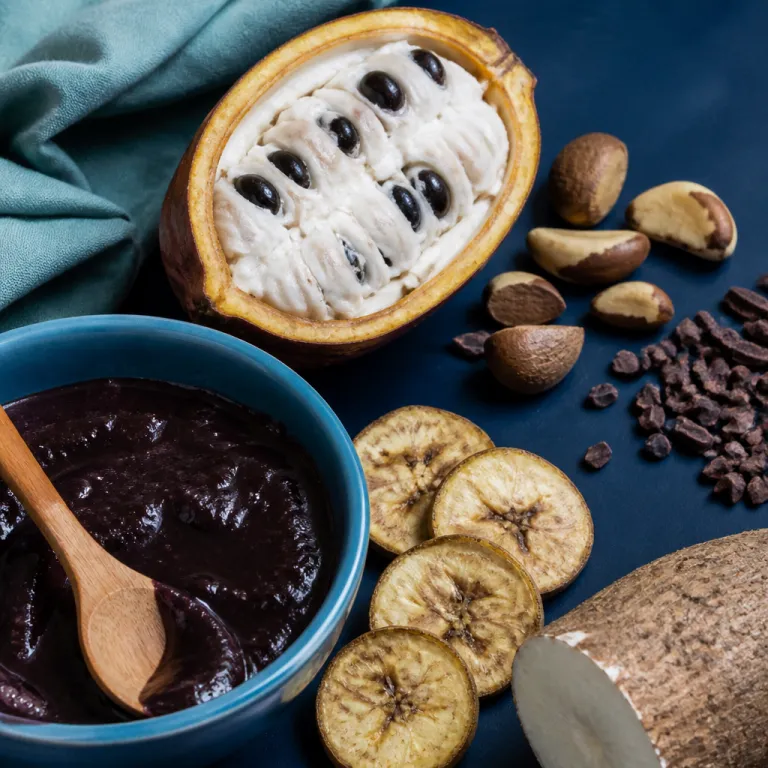
Cupuaçu, a cousin of cacao, appears in mousses, ice creams, and chilled parfaits, its flavor sitting somewhere between pineapple and chocolate with a distinctly tropical aroma. When you see it listed on the menu, expect a dessert that is less sugary than a standard chocolate cake but far more complex, especially when topped with Brazil nuts harvested from intact rainforest stands. Those nuts are not just garnish, they are a conservation tool, because Brazil nut trees only produce commercially viable quantities when the surrounding jungle remains undisturbed.
Some lodges play gently with the idea of a rainforest cafe, offering comfort dishes and playful names without losing their connection to place. You might see a grilled chicken sandwich with tomatoes, onions, and lettuce described in a way that nods to a rainforest cafe style presentation, yet the ingredients still come from nearby farms and river communities. For solo travelers craving something familiar after several days of intense flavors, these plates provide a reset while keeping you anchored to the Amazon rather than to a generic international menu.
Meat, sides and the reality behind jurassic chicken and mojo bones
Not every amazon rainforest food lodge menu leans entirely on fish, and meat eaters will find plenty of options built around chicken and beef. When you encounter playful names like jurassic chicken or mojo bones on a printed menu, understand that they usually refer to grilled chicken drumsticks or slow cooked beef or pork ribs glazed with citrus and local spices. The best properties treat these dishes as a bridge for guests who are less comfortable with river fish, not as the main event.
Expect chicken to arrive either roasted whole and carved at the table or grilled in pieces, often served with rice, potatoes, and a warm salad of sautéed vegetables. Beef may appear as thinly sliced picanha, marinated and grilled over hardwood, then plated with farofa, tomatoes, and onions, or as slow braises that echo regional stews. When lodges describe their mojo bones, they are usually highlighting a sticky, tangy sauce built from citrus, garlic, and sometimes a hint of tucupi, which ties even these comfort dishes back to the rainforest pantry.
Sides are where you will see the clearest overlap between Amazonian tradition and global expectations, with rice, potatoes, and mixed vegetables forming the backbone of most plates. Solo travelers with dietary restrictions often rely on these elements, and most lodges can adapt them into vegetarian or gluten free combinations on request. Vegan options exist but vary widely, so you should confirm availability before booking, especially if you plan to stay at more remote island style properties where supply lines are fragile.
Breakfasts, juices and how to brief the kitchen on your needs
Breakfast in the Amazon is rarely a simple affair, and the amazon rainforest food lodge menu at this time of day reads like a compact survey of regional produce. You will usually find platters of sliced tropical fruit, baskets of warm breads, and pitchers of freshly pressed juice made from açaí, cupuaçu, or more familiar fruits like orange and pineapple. Some lodges add eggs cooked to order, grilled fish leftovers from the previous night, and even small portions of rice and beans for guests who prefer a savory start.
For solo travelers, this is the easiest moment to communicate dietary preferences, because the dining room is quieter and staff have more time to talk through the menu. Explain clearly if you avoid chicken, beef, or fish, or if you need to keep onions, tomatoes, or certain vegetables off your plate, and ask which items can be served without butter or cheese if you are vegan. Many properties now keep detailed notes in their reservation systems, so once you have that first conversation, the kitchen will quietly adapt each subsequent meal.
Remember that supply chains in the rainforest are complex, and even luxury lodges cannot always guarantee specific imported items. When you request almond milk or gluten free bread, do so politely and accept that substitutions may be necessary, especially in remote jungle locations far from major cities. If you are planning a longer stay or a multi lodge itinerary, consult resources like the personalized tour guidance on tailored Amazon itineraries for discerning travelers to align your expectations with each property’s culinary capacity.
Foraging, cultural context and how lodges work with local experts
Behind every polished amazon rainforest food lodge menu lies a network of relationships with Local Guides, Indigenous Communities, and conservation partners. Many properties now offer structured Culinary Exploration days where mornings are dedicated to guided foraging tours, afternoons to cooking demonstrations, and evenings to traditional meals that showcase what you have seen in the forest. These programs use field guides, cooking utensils, and basic safety equipment to ensure that guests only handle plants and animals that have been clearly identified as safe.
During these sessions, you will often hear staff answer common questions in simple terms, such as “Fruits like acai, camu camu, and cupuacu are commonly consumed” or “Only consume animals identified as safe by knowledgeable guides.” They may also remind you that “Wear appropriate clothing,” “Use insect repellent,” and “Respect local customs” when you step into the forest with them. The aim is not to turn you into a forager overnight, but to deepen your appreciation of how many edible species the rainforest holds, with some estimates citing around 40 000 plant species in the wider region, a number echoed in botanical syntheses produced by WWF and Brazilian research institutions.
For solo travelers, these workshops offer a rare chance to ask detailed questions about how specific ingredients move from jungle to plate, from Brazil nuts gathered on the forest floor to manioc processed into tucupi. You will see how traditional methods like roasting, boiling, and fermenting intersect with modern kitchen techniques, and how innovation emerges when chefs and elders collaborate. By the time you return to the dining room, the menu reads less like a list of unknown words and more like a story you have helped to trace from riverbank to table.
Key figures on Amazonian biodiversity and lodge cuisine
- The wider Amazon region hosts around 40 000 identified plant species, according to botanical surveys summarized by organizations such as WWF and Brazilian research institutes, which underpins the extraordinary variety of ingredients that can appear on lodge menus.
- The Amazon Basin contains roughly 3 000 documented fish species, reported in regional ichthyology studies and government fishery reports, yet only a small fraction are regularly served in lodges because of safety, sustainability, and culinary tradition.
- Culinary programs at high end lodges often run year round, with structured timelines that include morning foraging, afternoon workshops, and evening meals, ensuring consistent guest access to educational food experiences regardless of season.
- Growing interest in exotic cuisines and sustainable tourism has led to increased collaboration with Indigenous Communities, which strengthens local economies while enriching the depth and authenticity of lodge dining.
FAQ about eating at Amazon rainforest lodges
What are the most common edible plants I will encounter in lodge meals ?
You are likely to encounter açaí, cupuaçu, and sometimes camu camu in juices, desserts, and breakfast bowls, along with manioc in various forms such as farinha, tapioca, or tucupi. Leafy greens, tomatoes, onions, and herbs usually come from lodge gardens or nearby communities. These ingredients reflect both the biodiversity of the region and the practical realities of what can be grown or sourced consistently.
Is it safe to eat wild animals or unfamiliar fish in the Amazon ?
At reputable lodges, menus are designed in consultation with Local Guides and Indigenous Communities, who only approve species that are safe to eat and harvested under sustainable guidelines. As one standard response puts it, “Only consume animals identified as safe by knowledgeable guides.” If you are unsure about a particular dish, ask staff to explain the species, its origin, and how it is prepared.
How do locals traditionally prepare Amazonian foods, and will I see this at lodges ?
Local culinary traditions rely heavily on roasting, boiling, and fermenting, especially when working with manioc, fish, and certain fruits. Lodges often adapt these methods into refined plates, such as grilled pirarucu with tucupi based sauces or jambu enriched stews served in smaller portions. You will experience the essence of traditional cooking, but framed within the service standards of luxury hospitality.
Can Amazon lodges accommodate vegetarian, vegan, or gluten free diets ?
Most luxury lodges can accommodate vegetarian and gluten free diets with advance notice, using rice, beans, vegetables, tropical fruits, and nuts as the foundation of tailored plates. Vegan options are more variable, especially in remote properties where plant based proteins beyond local beans and nuts may be hard to source. Communicate your needs clearly before booking and again at check in so the kitchen can plan menus and supplies accordingly.
What should I wear or bring for culinary foraging tours linked to lodge menus ?
For foraging or market visits that feed into lodge cooking classes, you should wear light long sleeves, long trousers, and closed shoes to protect against insects and undergrowth. Guides will usually remind you to “Wear appropriate clothing,” “Use insect repellent,” and “Respect local customs” during these activities. Bringing a small notebook or taking photos, where permitted, helps you connect what you see in the forest with what later appears on your plate.