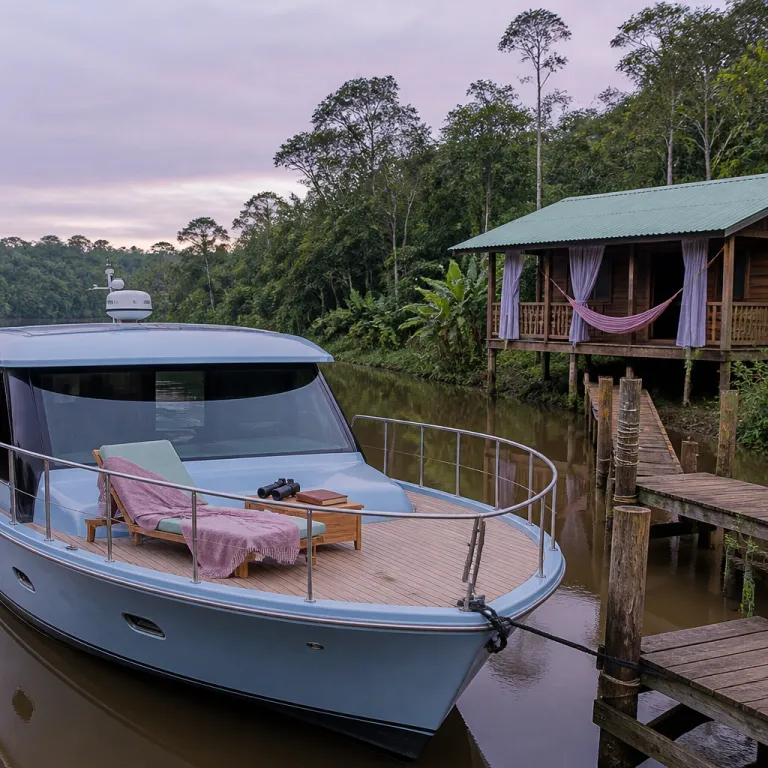
Rethinking accommodation in the Amazon rainforest for solo travelers
Accommodation in the Amazon rainforest is shifting from static jungle lodge stays to elegant river expeditions that move with the current. For solo travelers who want the best balance between comfort, wildlife access, and social connection, the new generation of river yachts along the Amazon River and its tributaries is quietly rewriting the rules of luxury. This change is reshaping how independent guests plan their time, budget, and expectations around every day and night in the forest.
Across the Peruvian Amazon near Iquitos, the Brazilian Amazon around Manaus, and the quieter reaches of Ecuador, river vessels now sit alongside every classic rainforest lodge in the premium segment. Where a traditional Amazon lodge once defined high end accommodation, today a curated fleet of small ships offers air conditioned suites, refined dining, and guided wildlife excursions that rival the best land based rainforest lodge experiences. For a solo explorer comparing accommodation in the Amazon rainforest, the question is no longer lodge versus city hotel, but lodge versus yacht and how each format will shape the rhythm of the trip.
This trend is backed by a wider rise in solo travel, with industry reports noting a double digit increase in independent itineraries across the Amazon region. Analysts tracking river cruise bookings in the Amazon River basin report even faster growth, reflecting how travelers use these yachts to reach remote national park zones that would require complex transfers between multiple Amazon lodges. When you look at accommodation in the Amazon rainforest through this lens, the river yacht becomes less of a cruise cliché and more of a moving rainforest lodge designed for people who value both privacy and community.
The new river yacht landscape: andBeyond Explorer, Aqua Nera, Delfin and Aria Amazon
The most interesting shift in accommodation in the Amazon rainforest is happening on the water, where a handful of carefully designed vessels now define the luxury benchmark. The forthcoming andBeyond Amazon Explorer, sailing from Iquitos into the Pacaya Samiria National Reserve, joins established names such as Aqua Nera, Delfin I and II, and Aria Amazon on the Peruvian Amazon. Each yacht positions itself differently, yet all compete directly with high end rainforest lodge options around Puerto Maldonado and Madre de Dios.
The andBeyond Amazon Explorer carries just 32 guests in 15 suites, with 12 luxury cabins of about 33 square metres, two superior suites, and one expansive deluxe suite exceeding 80 square metres, all fully air conditioned for humid season comfort. Interior design by Ken Freivokh and Adriana Hoyos draws on Shipibo Conibo Kené patterns, creating a sense of place that feels as intentional as the best Inkaterra rainforest lodge properties in Peru Amazon regions. Itineraries of three, four, or seven nights mean solo travelers can match their available time to the depth of exploration they want in the national reserve.
Aqua Nera and Aria Amazon focus on contemporary design and gastronomy, while the Delfin vessels lean into a more intimate, river home aesthetic along the Amazon River and Ucayali. All include guided nature walks, small boat excursions, and wildlife watching that rivals land based stays near Sacha Lodge in Ecuador or an Anavilhanas rainforest lodge in the Brazilian Amazon. For travelers planning accommodation in the Amazon rainforest during the dry season, these yachts offer predictable comfort regardless of water levels, while still accessing flooded forest zones that many fixed Amazon lodges cannot reach at certain times.
Solo travelers often ask why they should choose a river cruise over a jungle lodge, and the most concise industry answer is worth repeating here : “Why choose a river cruise over a jungle lodge? River cruises offer mobility, comfort, and access to diverse regions.” This mobility is especially valuable in the shoulder months between wet and dry season, when a yacht can reposition along the river to follow wildlife movements and changing water channels. For deeper context on how seasonal water levels shape land based stays, guides often reference analyses such as the detailed overview of falling water periods and trail access in the article on June in the Amazon and the opening of forest trails.
Why solo travelers are gravitating toward river expeditions
For an independent traveler, accommodation in the Amazon rainforest must solve three problems at once : safety, social connection, and access to meaningful wildlife experiences. A river yacht quietly addresses all three, which explains why solo travel in the region has grown faster than the overall market according to recent industry data. Analysts tracking cruise bookings in the Amazon basin report around 20 percent growth in river itineraries over a recent multi year period, outpacing the rise in traditional lodge stays.
On board a vessel such as Aria Amazon or Aqua Nera, shared dining tables, small group skiff outings, and nightly briefings with naturalists create a built in social structure that a remote Amazon lodge cannot always guarantee for solo guests. You are never obliged to join every activity, yet you will rarely eat alone unless you request it, which matters when you have traveled many hours by air to reach the forest. Group excursions for birdwatching, piranha fishing, or night spotting of caimans and nocturnal birds turn strangers into companions, while your private, air conditioned suite remains a quiet retreat.
River expeditions also remove the logistical burden of stitching together multiple Amazon lodges across Peru, Brazil, and Ecuador. Instead of arranging separate transfers between Puerto Maldonado, Madre de Dios, and perhaps a second rainforest lodge near a different national park, you unpack once and let the river carry you through changing fauna and flora zones. For families or couples this is a luxury ; for solo travelers it can be the difference between booking the trip or abandoning the idea as too complex, especially when comparing options described in critical pieces such as the analysis of misleading “resort” labels versus genuine family friendly lodges in the article on how the word resort misleads buyers.
River yacht versus rainforest lodge: immersion, wildlife and sense of place
Choosing accommodation in the Amazon rainforest often comes down to a trade off between breadth and depth. A fixed Amazon lodge, whether in the Peruvian Amazon near Puerto Maldonado or in the Brazilian Amazon close to Anavilhanas National Park, offers intense immersion in a single forest ecosystem. A river yacht, by contrast, glides through multiple habitats along the Amazon River or Rio Negro, giving you a moving panorama of wildlife and human life.
On land, properties such as Inkaterra Reserva Amazónica in Madre de Dios or Sacha Lodge in Ecuador build their identity around specific trail networks, canopy walkways, and nearby clay licks that reveal the local flora and fauna in slow, repeated detail. You wake to the same bend of river each day, learning how the forest light changes by the hour and by the season, and your guides become specialists in that micro region. For some travelers, this single place intimacy defines the best kind of accommodation in the Amazon rainforest, especially if they are passionate about particular bird species or long form scientific interpretation of fauna and flora.
On a yacht, the immersion is different but no less real, especially when itineraries penetrate protected zones such as Pacaya Samiria National Reserve or the labyrinth of islands near Anavilhanas National Park. You might spend one day in flooded forest scanning for pink river dolphins, another along blackwater channels of the Rio Negro, and a third near a remote wildlife center that monitors river turtles and primates. The sense of place comes from the river itself, from watching the forest profile shift as you travel, and from the cumulative effect of multiple short walks rather than one long, familiar trail behind a single rainforest lodge.
For travelers who want a hybrid approach, it is increasingly common to pair a three night river expedition with a stay at a land based Amazon lodge such as Cristalino Lodge in Brazil, which is profiled in depth in our guide to immersive luxury in the heart of the Amazon. This combination lets you sample the social rhythm of a yacht and then slow down in one forest enclave, comparing how wildlife viewing, guiding style, and even air conditioning strategies differ between ship and shore. When you evaluate accommodation in the Amazon rainforest through this comparative lens, the choice becomes less about right or wrong and more about which format matches your personal way of traveling.
Comfort, climate and design: what luxury means on the river
Luxury accommodation in the Amazon rainforest is no longer defined only by thread count or wine lists ; it is defined by how intelligently a property handles heat, humidity, and the sensory overload of the forest. On river yachts, this often starts with engineering : efficient air conditioning, sound insulation, and panoramic windows that frame the river without turning cabins into sealed boxes. For solo travelers who may spend more time in their suite reading or journaling, the difference between basic air conditioned comfort and well designed climate control is significant.
The andBeyond Amazon Explorer, Aqua Nera, Delfin vessels, and Aria Amazon all use full time air conditioning in cabins, while keeping public decks open to the air so guests still feel the Amazon River breeze. Design teams such as Ken Freivokh and Adriana Hoyos work with local artisans to bring Shipibo Conibo or other indigenous motifs into textiles and wall panels, ensuring that the interior narrative reflects the surrounding forest rather than ignoring it. This approach mirrors what high end Amazon lodges in Peru and Ecuador have done for years, but with the added challenge of marine engineering and limited space.
On land, properties such as Inkaterra and Sacha Lodge often rely on natural ventilation, fans, and strategic shading rather than full hotel style air conditioning, especially in more remote parts of the Peruvian Amazon or Ecuadorian national park buffer zones. Some rainforest lodge designs use screened walls and elevated walkways to keep air flowing while minimizing impact on local flora and fauna, which can feel more elemental but less controlled during the most humid hours of the day. When comparing accommodation in the Amazon rainforest, solo travelers should be honest about their own heat tolerance, because the best wildlife experiences mean early starts, long hours on the river, and the need for genuinely restorative sleep between excursions.
Costs, logistics and how to choose your Amazon base as a solo traveler
From a budgeting perspective, accommodation in the Amazon rainforest can be surprisingly transparent once you compare like with like. River yachts usually operate on an all inclusive basis, bundling meals, guiding, park fees, and most excursions into a single rate that looks high at first glance but often matches the real cost of a premium rainforest lodge plus transfers. For solo travelers, the key variables are single supplements, flight routes, and how many separate legs of travel they are willing to manage.
A typical three or four night river itinerary from Iquitos on Aria Amazon or Aqua Nera includes airport transfers, all meals, daily small boat outings, and guided walks in Pacaya Samiria or nearby protected areas, with only bar drinks and some tips as extras. By contrast, stitching together a stay at two different Amazon lodges in the Peruvian Amazon and Brazilian Amazon might require separate flights to Puerto Maldonado, Manaus, or even smaller airstrips, plus private boat transfers that can add several hours each way. Once you factor in the value of your time, the yacht format can become the best option for solo travelers who want maximum wildlife exposure with minimal logistical friction.
That said, land based stays still have a strong case, especially for travelers who prefer to linger in one forest region or who are particularly interested in specific national park ecosystems. A week at a single rainforest lodge near Anavilhanas National Park or deep in Madre de Dios can cost less than a top tier yacht, while offering access to a dedicated wildlife center, research projects, or community initiatives that are harder to integrate into a moving itinerary. When weighing accommodation in the Amazon rainforest, solo travelers should map their priorities : is the goal to sample multiple river landscapes in a short time, or to form a relationship with one bend of river, one trail network, and one guiding team.
Regional nuances: Peru, Brazil and Ecuador for river yachts and lodges
Where you choose accommodation in the Amazon rainforest will shape not only your daily activities but also the cultural and ecological context of your stay. Peru, Brazil, and Ecuador each offer distinct combinations of river yachts and Amazon lodges, and solo travelers should think in terms of river systems rather than political borders. The Peruvian Amazon around Iquitos and Puerto Maldonado is currently the most developed for high end river expeditions, while the Brazilian Amazon and Ecuadorian regions lean more heavily toward land based rainforest lodge experiences.
In Peru Amazon regions, vessels such as andBeyond Amazon Explorer, Aqua Nera, Delfin, and Aria Amazon operate primarily along the Amazon River and its tributaries, with itineraries that penetrate Pacaya Samiria and other national reserve zones rich in wildlife. These routes pair well with pre or post stays at lodges in Madre de Dios, where properties like Inkaterra Reserva Amazónica and Inkaterra Hacienda Concepción offer canopy walkways, oxbow lakes, and close up encounters with local flora and fauna. For solo travelers, this combination delivers both the social structure of a yacht and the contemplative pace of a forest based Amazon lodge.
The Brazilian Amazon around Manaus and the Rio Negro is better known for land based stays near Anavilhanas National Park, where a scattering of Amazon lodges offers canoe outings, archipelago explorations, and visits to community projects. Ecuador, by contrast, focuses on deep immersion rainforest lodge experiences in and around Yasuni National Park, with Sacha Lodge and similar properties providing canopy towers, clay licks, and guided night walks that feel almost laboratory precise in their attention to wildlife. Across all three countries, the core decision for solo travelers remains the same : which format of accommodation in the Amazon rainforest will best match their appetite for movement, their tolerance for heat and humidity, and their desire for either solitude or structured company.
Key figures shaping solo river expeditions in the Amazon
- Industry reports tracking global travel patterns indicate that solo travel has increased by around 15 percent over a recent multi year period, a shift that directly feeds demand for flexible accommodation in the Amazon rainforest (Travel Industry Report, mid decade).
- Specialized cruise market analyses show river cruise bookings in regions such as the Amazon basin growing by approximately 20 percent over a similar timeframe, underscoring how river yachts are gaining ground on traditional Amazon lodges for premium travelers (Cruise Market Analysis, mid decade).
- The andBeyond Amazon Explorer is designed for just 32 guests across 15 suites, a configuration that keeps group sizes small enough for intimate wildlife excursions while still offering the social structure many solo travelers seek on longer journeys.
- Typical river itineraries in the Peruvian Amazon run for three, four, or seven nights, which allows solo travelers to align their time in the forest with international flight schedules and avoid unnecessary overnight stays in gateway cities.
- Transfers from major hubs such as Lima or São Paulo to Amazon gateways like Iquitos, Puerto Maldonado, or Manaus usually involve flights of one to three hours, a manageable hop that makes even short river expeditions viable within a broader South American itinerary.
FAQ: accommodation in the Amazon rainforest for solo travelers
Are river cruises in the Amazon suitable for solo travelers
Yes, river cruises in the Amazon are well suited to solo travelers because they combine structured group activities with private cabins and predictable logistics. Shared meals, guided excursions, and small group briefings create easy opportunities to meet other guests without forced socializing. Safety, navigation, and permits are handled by the operator, which removes much of the stress of independent travel in remote forest regions.
Why choose a river yacht instead of a jungle lodge
A river yacht offers mobility, comfort, and access to diverse regions along the Amazon River and its tributaries, while a lodge focuses on deep immersion in a single location. On a yacht, you can visit multiple habitats and communities in one trip without repacking or arranging extra transfers. A lodge, by contrast, is better if you want to study one ecosystem in detail or spend more time on forest trails than on the water.
How does the dry season affect Amazon accommodation choices
During the dry season, water levels drop, exposing more river beaches and opening certain forest trails while limiting access to some flooded areas. River yachts can often adapt by adjusting their routes, maintaining access to wildlife rich zones even when smaller channels become too shallow. Lodges may gain new hiking options but lose some canoe routes, so travelers should match their expectations for boating versus walking to the specific month and region they plan to visit.
Is a river cruise more expensive than staying at an Amazon lodge
On paper, river cruises usually appear more expensive, but they often include meals, guiding, park fees, and transfers that might be separate line items at a lodge. When you add the cost of flights, boat transfers, and private excursions needed to link multiple Amazon lodges, the total can approach or even exceed an all inclusive yacht fare. Solo travelers should compare full trip budgets rather than nightly rates, paying attention to single supplements and what is genuinely included.
Which Amazon region is best for a first time solo visitor
The Peruvian Amazon around Iquitos is often the best starting point for solo travelers interested in river yachts, thanks to established operators such as andBeyond, Aqua Expeditions, and Delfin. Those who prefer land based immersion might look to Madre de Dios near Puerto Maldonado in Peru, the Rio Negro and Anavilhanas region in Brazil, or the lodge networks in Ecuador near Yasuni National Park. The right choice depends on whether you prioritize ease of logistics, specific wildlife interests, or cultural experiences with local communities.