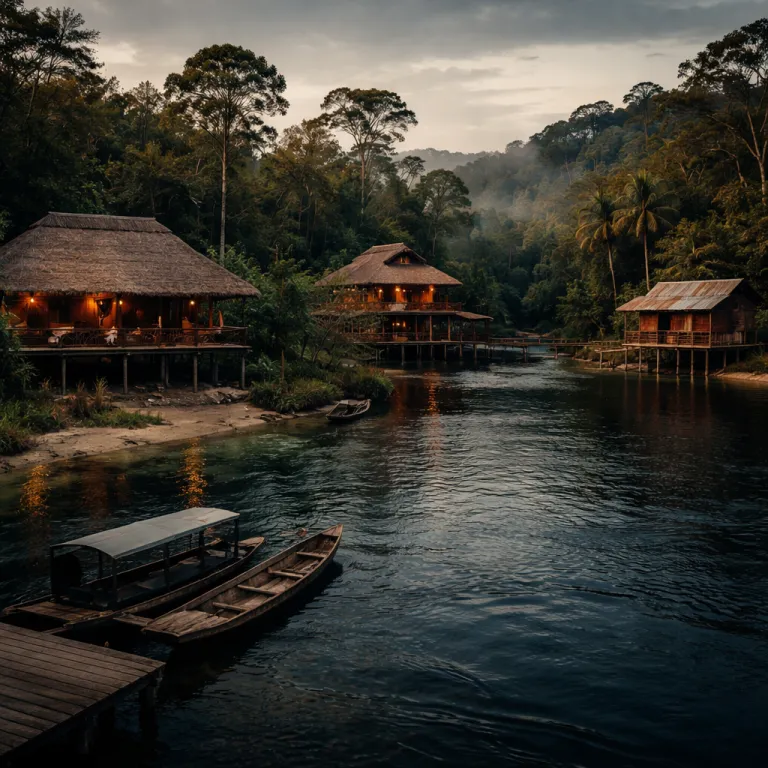
Where to stay in the Amazon rainforest when you want real comfort
Choosing where to stay in the Amazon rainforest starts with one question: how close to the wild do you truly want to sleep. Luxury here is not marble lobbies but a rainforest lodge that balances comfort, safety and access to wildlife, while still feeling like a private expedition base. When you read property descriptions, note whether the lodge is on a river bend, deep in the jungle or near a gateway town, because that single detail will shape every experience you have.
Across the Amazon, the best place to stay for couples usually means small scale jungle lodges with no more than a few dozen suites. These rainforest lodges often work with local communities and conservation projects, so your stay will support guides, trackers and researchers who know every call in the canopy. A refined Amazon lodge will also manage logistics from the nearest airport, which matters when you are landing in Puerto Maldonado, Manaus or Leticia after a long flight with kids or without them.
For a first time visit, many travelers ask where to stay in the Amazon rainforest if they want both ease and depth. The answer is to pair one gateway night in a city hotel with three or four nights in a dedicated rainforest lodge, ideally on a tributary of the Amazon River or a black water river system. This rhythm gives you time to adjust, then fully immerse in jungle wildlife before returning to Wi Fi and flights home.
Peru and the Peruvian Amazon: clay licks, canopy science and comfort first
Peru is often the best answer when couples ask where to stay in the Amazon rainforest for a soft landing into serious nature. The Peruvian Amazon around Puerto Maldonado and Madre de Dios offers short transfers, polished service and rainforest lodges that understand honeymoon level expectations. If you want to combine Machu Picchu with a jungle stay, Peru Amazon itineraries make that pairing straightforward and time efficient.
Inkaterra Reserva Amazónica is the flagship Inkaterra property in this region, a rainforest lodge set on the Madre de Dios river with 35 cabanas. This Amazon lodge sits inside a private concession that feels like a national reserve, yet you are only a short boat ride from Puerto Maldonado, which keeps travel time manageable for tired kids or jet lagged adults. When you read the activity list, note the canopy walkway, night walks and river excursions: these details show how the lodge turns the surrounding rainforest into a living classroom.
Nearby, the wider Tambopata area and the Tambopata National Reserve are where Peru really differentiates itself. Here, clay lick excursions at dawn reveal macaws and parrots in numbers that many Brazil itineraries simply cannot match, and a good guide will explain the mineral rich geology that draws them in. If you are planning refined Peru Amazon tours, this is one of the strongest areas to stay for serious wildlife, and you can deepen that planning with a dedicated overview of Peru Amazon tours for refined travelers.
Inkaterra’s portfolio: how Reserva Amazónica and Hacienda Concepción shape your stay
Within Peru, the Inkaterra brand has turned the question of where to stay in the Amazon rainforest into a choice between different styles of immersion. Inkaterra Reserva Amazónica, sometimes written as Inkaterra Reserva Amazonica, is the more iconic rainforest lodge, with river facing cabanas and a strong focus on canopy level experiences. Couples who want a classic Amazon lodge with polished service, spa rituals and curated jungle walks will feel at home here.
Inkaterra Hacienda Concepción, often shortened to Inkaterra Hacienda, sits deeper in the jungle and feels more like a research outpost softened by good linen and attentive staff. This place to stay suits travelers who read field guides for pleasure and want their guide to talk about forest succession, not just photo stops. When you compare both properties, note how each uses the Madre de Dios river: one as a stage for sunset cruises, the other as a working artery into quieter oxbow lakes.
For couples pairing Machu Picchu with the Peruvian Amazon, a smart sequence is city, highlands, then rainforest lodges, so your final stay is slow and river focused. You might fly from Cusco to Puerto Maldonado, transfer by boat to your chosen rainforest lodge, then spend your last hope day in Peru drifting along the river listening for howler monkeys. If you are extending beyond Peru into Bolivia or the Andes, it is worth looking at curated Peru and Bolivia journeys with refined rainforest stays to keep transfers efficient.
Brazil: black water rivers, floating architecture and Anavilhanas style seclusion
Brazil answers the question of where to stay in the Amazon rainforest with a different palette: think black water rivers, archipelagos and floating structures. Around Manaus, the Anavilhanas archipelago offers some of the best settings for an Amazon lodge, with mirror calm channels and islands that feel almost Mediterranean in their rhythm. Here, Anavilhanas Jungle Lodge and Mirante do Gavião Lodge set the tone for luxury, using contemporary architecture that still respects the rainforest.
Uakari Lodge, in the Mamirauá Sustainable Development Reserve, takes the idea of rainforest lodges further by floating directly on the floodplain. This is an inspired place to stay in the Amazon rainforest if you want to wake to pink dolphins surfacing near your deck and to read water levels like a local. Transfers take more time than in Puerto Maldonado, so couples should note that a one week itinerary in Brazil usually means choosing one region well rather than trying to combine several.
Brazil does not offer the same clay lick spectacles as Tambopata National Reserve, but it compensates with black water canoeing, river beaches and a sense of scale that feels cinematic. Families with older kids often enjoy the variety of activities here, from stand up paddling on tannin rich lagoons to night safaris where a guide will spot caimans by eye shine alone. If you are comparing where to stay across the wider Amazon basin, Brazil is the choice for those who want dramatic river landscapes and design forward jungle lodges.
Ecuador and Colombia: Sacha Lodge, La Selva and tri border immersion
North of Peru, Ecuador and Colombia answer where to stay in the Amazon rainforest with more intimate, often more experimental projects. In Ecuador, Sacha Lodge and La Selva Lodge sit in the Yasuni region, accessible via a flight to Coca and a boat journey along a tributary of the Amazon River. These rainforest lodges are known for canopy towers, excellent birding and air conditioned suites, which can be a decisive detail for travelers sensitive to heat.
Sacha Lodge in particular has become a reference point for couples who read trip reports carefully and want a balance of comfort and serious wildlife. The lodge’s canopy walkway and observation towers give you a vertical experience of the rainforest that many Peru Amazon properties cannot match, and a good guide will help you spot everything from toucans to sloths. La Selva Lodge, by contrast, leans into lagoon tranquility, with canoe rides that feel almost meditative at the right time of day.
Colombia’s Amazon, anchored by Leticia and the nearby Amacayacu National Reserve, offers smaller, often indigenous run jungle lodges along the tri border with Brazil and Peru. This is an appealing place to stay in the Amazon rainforest if you are curious about culture as much as wildlife, and if you are comfortable with slightly more rustic infrastructure. Community focused rainforest lodge projects such as Calanoa, Heliconia or family run maloca style stays sit alongside ayahuasca adjacent retreats and low impact river trips, making this region ideal for travelers who value connection over conventional luxury.
How to choose: access, season, kids and the right level of wild
When couples ask where to stay in the Amazon rainforest, the most honest guide starts with logistics. Manaus, Iquitos, Puerto Maldonado and Leticia each offer different access profiles, and your tolerance for small planes, long river transfers and humidity will shape the best choice. For a one week trip, note that Puerto Maldonado and Madre de Dios usually mean shorter transfers, while deep Ecuadorian or Colombian jungle lodges demand more time.
Dry season conditions between June and November are generally the most comfortable for travel. This matters because water levels affect which rainforest lodges are reachable, how often you will be on a boat and what wildlife you are likely to see. Families with younger kids often prefer shoulder months when river levels are moderate, making it easier to step in and out of canoes at your chosen Amazon lodge.
Health and safety questions are part of any serious where to stay in the Amazon rainforest conversation. Are there health risks in the Amazon? Yes, vaccinations and precautions are recommended. What wildlife can I see in the Amazon? Jaguars, sloths, macaws, and pink dolphins. These are not scare notes but practical details: a good rainforest lodge will brief you clearly, provide rubber boots and keep first aid protocols discreetly in the background.
Reading the fine print: what to look for in a luxury Amazon lodge
Once you have chosen your country, the final where to stay in the Amazon rainforest decision comes down to reading between the lines of each property. Look at how many guests the rainforest lodge hosts at full capacity, how many guides are on staff and whether excursions are shared or private. A lower guest to guide ratio usually means more flexible wildlife outings and a better chance of tailoring each river or jungle walk to your interests.
Pay attention to how a lodge talks about its relationship with any nearby national reserve or community managed forest. Properties near Tambopata National Reserve, for example, should be transparent about how they access clay lick sites and how they limit group sizes at sensitive times. In Ecuador, Sacha Lodge and La Selva Lodge both publish details about their conservation partnerships, which is a reassuring sign for travelers who want their stay to support the wider Amazon rainforest.
For couples comparing rates, it helps to read curated overviews of high end hotel deals and unique rainforest stays rather than scanning endless booking engines. These guides will highlight when a place to stay includes private transfers, specialist birding guides or spa treatments in the nightly rate, which changes the real value equation. In a region where logistics are complex and the jungle is unforgiving, the cheapest option is rarely the best choice.
Key figures for planning an Amazon rainforest stay
- The Amazon rainforest covers about 5 500 000 km² across nine countries, so choosing where to stay in the Amazon rainforest effectively means narrowing to one or two specific river basins within this vast area (data from global geographic surveys such as the World Wildlife Fund and national mapping agencies).
- Dry season conditions between June and November typically bring lower rainfall and fewer mosquitoes, which is why many rainforest lodges schedule maintenance and peak operations around this window (based on regional climate records from Brazilian, Peruvian and Ecuadorian meteorological services).
- Gateway cities such as Manaus, Iquitos and Puerto Maldonado handle large volumes of domestic and international passengers each year, yet only a small fraction continue on to remote jungle lodges, which keeps most high end properties intentionally low density (airport authority statistics and tourism board reports).
- Eco tourism in the Amazon has grown steadily over recent decades, with a marked rise in rainforest lodge projects that partner with local communities to protect surrounding forest, according to conservation organizations working in the region, including long term studies by Rainforest Alliance and similar groups.
FAQ about luxury stays in the Amazon rainforest
What is the best time of year to stay in the Amazon rainforest
Dry season conditions between June and November are generally the most comfortable for travel. During these months, river levels are generally lower, trails are more accessible and there are fewer mosquitoes. As a practical tip, check recent water level updates from your lodge a few weeks before travel so you can pack footwear and clothing suited to current conditions.
How do I choose between Brazil, Peru and Ecuador for a luxury lodge
Peru, especially the Peruvian Amazon around Puerto Maldonado and Tambopata, is ideal if you want easy access, clay lick experiences and the option to combine with Machu Picchu. Brazil excels for black water rivers, floating structures and dramatic river scenery near Manaus and the Anavilhanas archipelago. Ecuador offers more compact travel with high quality rainforest lodges like Sacha Lodge and La Selva Lodge focused on canopy towers and birding. A useful rule of thumb is to choose the country that best matches your connecting flights and one or two “must see” experiences rather than chasing every highlight at once.
Are there health risks I should prepare for before my stay
Are there health risks in the Amazon? Yes, vaccinations and precautions are recommended. Travelers should consult a travel medicine specialist several weeks before departure to discuss vaccines, malaria prophylaxis and personal medical needs. Reputable rainforest lodges will also provide guidance on insect protection, safe drinking water and emergency procedures. Pack a small personal kit with any prescription medicines, high DEET or picaridin repellent and oral rehydration salts so you are not dependent on lodge supplies.
What kind of wildlife can I realistically expect to see from a lodge
What wildlife can I see in the Amazon? Jaguars, sloths, macaws, and pink dolphins. Sightings of elusive species like jaguars are never guaranteed, but macaws, monkeys, caimans and river dolphins are commonly observed on guided walks and boat trips. Choosing a lodge near a clay lick or oxbow lake can significantly increase your chances of memorable encounters. For better viewing, bring compact binoculars and be ready to head out at dawn and after dark, when many animals are most active.
How far in advance should I book a high end Amazon lodge
For peak dry season dates, it is wise to book your preferred Amazon lodge six to nine months in advance, especially if you want specific cabana categories at properties like Inkaterra Reserva Amazónica or Sacha Lodge. Shoulder season dates can sometimes be secured closer to departure, but small rainforest lodges fill quickly due to limited capacity. Early booking also allows more time to coordinate flights, permits and any add on journeys to the Andes or coastal cities, and to flag dietary needs or mobility considerations with the lodge team.
References: Rainforest Cruises; SouthAmerica.travel; Exploor Peru.