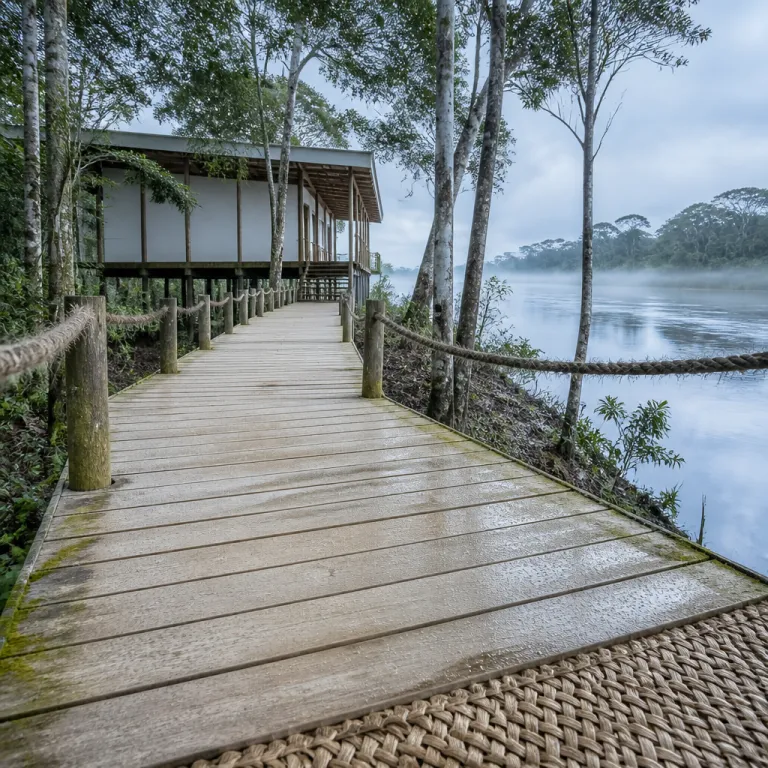
How amazon ecotourism conservation lodge funding really works
Your room rate in the Amazon rainforest is not just paying for a canopy bed and a sunset caipirinha. In the best cases, lodge revenue becomes a quiet financial engine for conservation, local communities and long term rainforest protection. In weaker models, the same bill mostly feeds distant owners while the surrounding nature and people see little benefit.
Across the Amazon, three actors usually share your money: lodge owners, the local community workforce and conservation organizations that partner on ecotourism projects. A 2022 internal review of jungle properties by a Latin American tour operator suggested that direct booking revenue can keep roughly 40–45 percent of each stay closer to the forest, while online travel agencies often remove about 15 percent in commission before any conservation efforts are funded. These figures are indicative rather than universal, and readers should consult each lodge’s published impact report or financial statement for precise numbers. When you choose where and how to book, you are effectively voting for one management model of Amazon development over another.
Think of your stay as a small but targeted investment in sustainable development rather than a simple tourism purchase. In the Peruvian Amazon, for example, a remote eco lodge might channel net profits into protecting traditional land around a national reserve, while a less engaged property treats the rainforest as a backdrop and nothing more. Understanding these differences is the first step toward aligning your romantic escape with real conservation and social impact.
The community owned lodge model in Tambopata
Nowhere is the power of community based Amazon tourism clearer than at Posada Amazonas, near the Tambopata National Reserve in Madre de Dios. Here, Rainforest Expeditions operates in a joint venture with the indigenous communities of the local Community Infierno, and the lodge community literally owns half the business. This structure means that tourism is not an extractive activity on indigenous land but a negotiated partnership where local communities share both risk and reward.
At Posada Amazonas, ecotourism is woven into daily life: indigenous guides lead wildlife walks, explain traditional plant uses and interpret the forest as living history. According to the lodge’s long term agreement, 60 percent of net profits goes to Community Infierno and 40 percent to the operating company, with community funds earmarked for education, health and small scale development, while another portion supports conservation efforts around the Tambopata National landscape. As one community leader summarized in a recent impact summary, “Tourism here pays for our children’s studies and gives us a reason to keep the forest standing.” Readers can consult the lodge’s published agreements and annual impact summaries to verify how revenue is distributed over time.
For a couple choosing a lodge in the Peruvian Amazon, this model offers rare transparency and a tangible social contract. You sleep in an eco lodge built with local materials, eat food sourced from nearby farms and know that your stay strengthens indigenous communities instead of displacing them. A lodge manager interviewed for the same report put it simply: “When guests book directly with us, more than half of what they pay stays within a day’s travel of the forest.” For a deeper look at how such stays fit into a broader low carbon travel strategy, explore the site’s analysis on why carefully managed Amazon tourism is not the climate failure critics claim.
Private reserves and research lodges: when your stay buys time for nature
Some of the most effective rainforest tourism funding models are built around private reserves and research partnerships. In Brazil, Cristalino Lodge protects one of the largest private reserves in the southern Amazon, and every guest night helps pay for patrols, scientific monitoring and habitat management. The Cristalino Lodge impact report notes that around 25 percent of annual operating expenditure is dedicated to conservation management and environmental education through the Cristalino Ecological Foundation. Here, tourism is the financial shield that keeps logging and speculative development away from primary rainforest.
Farther northwest, Uakari Lodge inside the Mamirauá Sustainable Development Reserve shows how an eco lodge can anchor both science and social progress. The lodge is co managed with local communities, and a portion of tourism revenue supports research on flooded forest wildlife while another portion funds community projects in surrounding villages. A recent summary from the Mamirauá Institute for Sustainable Development highlights that tourism income at Uakari has financed community monitoring of river dolphins and black caimans alongside scholarships for young residents. This research linked model turns each stay into a micro grant for conservation and for the people who have lived with the river’s rhythms for generations. Impact reports from these lodges, where available, allow travelers to verify funded projects, research outputs and community benefits.
Brazil has also promoted ecological investment programs that channel public and private capital into sustainable tourism infrastructure in conservation areas. Official government portals and bank sustainability reports document hundreds of millions of dollars in green finance, with the Brazilian Development Bank (BNDES) alone reporting multi billion real credit lines for low impact development and nature based tourism. For couples, that means more options where luxury aligns with nature rather than eroding it, especially when properties publish clear figures on how much of your bill supports conservation efforts. To explore how these principles translate into specific itineraries, consult the site’s curated guide to sustainable luxury hotel booking experiences in the Amazon rainforest.
Following the money: questions to ask before you book
Luxury travelers often assume that any eco lodge in the Amazon is automatically good for conservation and local communities. Reality is more nuanced: some properties are exemplary, others use green language while keeping most net profits far from the rainforest and its people. The gap usually lies in what is not published, from revenue sharing agreements to the origin of guides and staff.
Before you confirm a lodge, ask what percentage of revenue stays in the local community and in nearby indigenous communities. Clarify whether the lodge funds its own conservation area, contributes to a national reserve or supports specific ecotourism projects in the Peruvian Amazon or elsewhere in the basin. Ask if naturalist guides are hired from the local community or flown in from the state capital, and whether there is a formal joint venture or only informal collaboration with local communities.
It is also worth requesting an impact report that details conservation efforts, social programs and long term commitments to sustainable development. Properties serious about transparent lodge funding will usually track how tourism supports wildlife monitoring, traditional land rights and community education. For couples planning a wider journey that balances romance with responsibility, this tailored itinerary for discerning travelers seeking Amazon rainforest luxury stays in Peru offers a useful benchmark for what good practice looks like.
How your stay shapes the future of the amazon and its communities
Every night you spend in an Amazon lodge is a small act of land use planning. In regions like Madre de Dios, where mining and ranching push against the forest edge, community oriented tourism can make conservation a viable economic choice for a lodge community. When tourism revenue pays better than clearing land, nature suddenly has a competitive business case.
Community based tourism models, especially around Tambopata National Reserve and similar protected areas, show how local communities can lead sustainable development on their own terms. Here, ecotourism projects help finance schools, health posts and small enterprises while reinforcing traditional knowledge about wildlife, medicinal plants and seasonal cycles. The presence of engaged travelers also brings a subtle form of state attention, encouraging government agencies to maintain basic services and support conservation efforts.
For couples, the romance of a night walk where a guide hears a jaguar before you glimpse its eyes is inseparable from the social fabric that makes such experiences possible. Choosing lodges that publish clear management structures, respect indigenous rights and invest in long term community partnerships ensures that your stay strengthens rather than weakens the Amazon. In this way, your booking becomes part of a wider story where tourism, conservation and local dignity share the same canopy.
FAQ
How much of my lodge payment usually supports conservation?
The share of your room rate that funds conservation varies widely between properties. Some lodges allocate a defined percentage of net profits to protected areas or wildlife research, while others contribute only through occasional donations. As a simple illustration, a hypothetical US$500 stay might send US$250 to operating costs and staff, US$100 to owners, US$75 to community funds and US$75 to conservation programs, but only a detailed impact report can confirm real figures. Ask for specific numbers and examples of funded projects to gauge whether rainforest protection is central or marginal to their business model.
Why is booking directly with a lodge often better for local communities?
Direct bookings avoid the higher commissions charged by many online travel agencies, which can remove around 15 percent of each reservation before it reaches the forest. When you book directly, more revenue stays with the lodge owners, staff and partner organizations who manage conservation and social programs. This extra margin can fund local salaries, training and ecotourism projects that protect surrounding rainforest.
How can I tell if a lodge genuinely supports indigenous communities?
Look for formal agreements or joint ventures with indigenous communities, not just marketing language about cultural experiences. Serious lodges will employ indigenous guides, share decision making on land use and publish information about revenue sharing or community funds. If a property cannot explain how local communities benefit financially and politically from tourism, its impact is likely limited.
Does staying in the amazon rainforest really help protect wildlife?
When managed well, tourism can finance anti poaching patrols, habitat monitoring and scientific research that directly benefit wildlife. Lodges inside or near reserves often use guest revenue to support rangers, maintain trails and collect data on key species. The key is choosing properties that can show concrete conservation efforts rather than relying on generic eco friendly claims.
What simple steps can couples take to make their stay more sustainable?
Choose lodges with transparent funding models, strong ties to local communities and clear conservation commitments. Travel with smaller luggage, avoid single use plastics and join guided activities that support research or community initiatives. Finally, share feedback with lodge management about the importance of credible, well documented lodge funding so that your expectations help shape future practices.