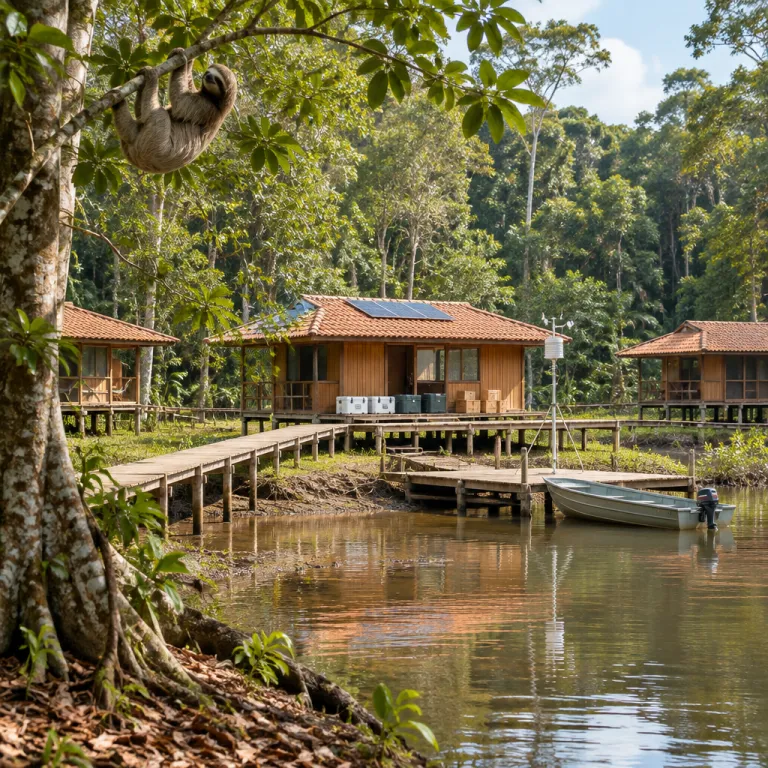
How a real amazon research station reshapes your stay
Choosing an amazon research station lodge for biodiversity focused travel changes everything. A genuine amazon research center brings long term research, species monitoring, and conservation work directly into your daily routine as a guest. In the peruvian Amazon this can mean waking up inside a living laboratory rather than beside a generic rainforest trail.
At a true amazon research facility, resident biologists maintain species inventories that go far beyond what standard rainforest tours usually reference. Their amazon research often tracks specific species primates, rare birds, and cryptic amphibians along a permanent trail grid, so every walk through the forest follows mapped data points rather than improvised paths. When a guide at a center lodge points out saki monkeys or a shy saki monkey pair, they are often drawing on years of research work, not yesterday’s sightings.
For a solo traveler, this depth turns a simple forest walk into a structured amazon adventure with purpose. You are not just looking for wildlife in the amazon rainforest, you are stepping through a research center where each river, trail, and forest clearing has been surveyed repeatedly. That level of amazon conservation focus is what separates a serious eco lodge from a property that only borrows scientific language for marketing.
The ACTS canopy walkway and what guests really access
Near Iquitos in Peru, the ACTS Field Station shows how amazon research infrastructure can be shared with travelers. The ACTS canopy walkway rises over 35 meters above the forest floor and stretches for about 500 meters, suspended between 14 large trees in the heart of the amazon rainforest. For guests at ExplorNapo Lodge and the ACTS Field Station, access to this research center style walkway is built into the stay, with additional tours offered to Explorama and Ceiba Tops guests on longer itineraries.
Walking this elevated trail grid at dawn, you move through the level where many species primates, canopy birds, and epiphytes actually live. The walkway transforms a standard forest trail into a vertical amazon adventure, changing which wildlife species you can reasonably expect to see. Instead of only hearing monkeys and saki monkeys in the distance, you may watch a saki monkey group cross a branch at eye level while researchers quietly note behavior for ongoing amazon research.
Planning an exceptional rainforest escape with a refined itinerary becomes easier when you understand what this kind of infrastructure offers. A canopy system like ACTS is not a theme park attraction, it is a working tool for amazon conservation and long term monitoring of forest dynamics. When a lodge includes structured access to such a research center, it signals a deeper commitment than simply arranging surface level river cruises or short forest tours.
Reading between the lines: real research partnerships versus marketing
Not every amazon lodge that mentions research is anchored to a functioning research center. Some properties in the peruvian Amazon use scientific vocabulary loosely, calling naturalist guides scientists and labeling ordinary forest walks as amazon research experiences. Your task as a traveler is to separate these claims from lodges that genuinely support conservation work and biodiversity monitoring.
Start by asking for the name of the research center or university that partners with the lodge. Serious amazon conservation projects usually publish research, maintain a defined trail grid, and host visiting scientists who work on specific species, such as species primates or species saki in targeted study plots. If a property near the Tahuayo River or Tamshiyacu Tahuayo region cannot point to any published research or long term monitoring of monkeys, birds, or other wildlife, the scientific angle is probably superficial.
Look also at how your stay connects to local communities and sustainable economies under the forest canopy. Some center lodge operations integrate agroforestry and cacao projects, and guests can learn about amazonian cacao under the canopy through detailed briefings on how forest friendly crops support conservation. When a lodge’s narrative about the amazon river, nearby villages such as San Pedro, and the surrounding forest includes concrete conservation outcomes rather than vague promises, you are usually dealing with a more credible amazon research station lodge biodiversity experience.
Solo traveler advantages at a working research center lodge
Traveling alone in the amazon rainforest can be an asset rather than a drawback. At a genuine amazon research station lodge, solo guests often slip easily into small groups of researchers, graduate students, and field technicians heading out on focused tours. This creates a more intimate adventure than large group river cruises or standard amazon cruises that follow fixed scripts.
Early mornings might find you joining mist netting sessions where ornithologists gently extract birds, record measurements, and release them back into the forest. Night walks led by herpetologists can reveal amphibians and reptiles that most casual rainforest tours never encounter, especially along carefully mapped sections of the trail grid. When primatologists invite guests to follow saki monkeys or other species primates along a marked trail, you witness how structured amazon research turns fleeting wildlife sightings into data rich observations.
Between field sessions, the center lodge often becomes a social hub where conversations about amazon conservation, peruvian Amazon politics, and river dynamics flow as easily as coffee. Solo travelers can ask detailed questions about the amazon river, the role of side channels like the Tahuayo River, and how cloud forest headwaters upstream influence lowland biodiversity. This kind of access to people who work daily in the forest is a quiet luxury that no list of lodge amenities can match.
What you will see, what you will not, and how to book wisely
Even at the best amazon research station lodge, wildlife encounters follow the forest’s rules. You may spend days in the peruvian Amazon without seeing a jaguar, yet still watch multiple species primates, river dolphins, and intricate insect life along the amazon river and its tributaries. The value of staying near a research center lies in the quality of interpretation, not in guaranteed sightings.
Canopy access, such as the ACTS walkway, shifts probabilities in your favor for certain species. Arboreal mammals like saki monkeys and other species saki, as well as canopy birds, become more visible when you move through their level rather than scanning from the forest floor. River based activities, whether small boat outings or more comfortable river cruises, complement this by opening windows onto aquatic wildlife and floodplain forest dynamics.
When booking, ask specific questions about amazon research, conservation outcomes, and daily logistics. Request examples of published work linked to the lodge, details on the trail grid, and how often researchers are actually in residence. For a broader cultural perspective on staying in the amazon, you can also look at how indigenous community stays around Iquitos host differently, which helps you compare research focused lodges with community led experiences beyond standard cruises on the amazon.
Aligning river journeys, eco lodges, and research driven stays
Many travelers pair an amazon research station lodge with time on the water. Small scale river cruises on the amazon river or its tributaries offer comfort and reach, while nights at an eco lodge or center lodge near a research center deliver depth and repeated access to the same forest trails. This combination lets you experience both the vastness of the amazon and the fine grained detail of a single trail grid.
When comparing cruises on the Amazon with land based stays, think about how each option handles biodiversity and conservation. Some amazon cruises and broader cruises on the Amazon market wildlife heavily but rely on short, crowded tours that barely scratch the surface of amazon research or long term monitoring. A lodge integrated with a research center, by contrast, can show you how conservation work unfolds over seasons, whether in the Tamshiyacu Tahuayo landscape, near San Pedro communities, or along lesser known river channels.
For travelers who care about amazon conservation, the most meaningful itineraries often link multiple perspectives. You might spend several nights at a research center lodge, then move to a refined eco lodge that partners with local communities, before ending with a comfortable segment on carefully chosen river cruises. Across these experiences, the constant thread is a respect for the forest as a living system rather than a backdrop, and a clear understanding of what an amazon research station lodge biodiversity focus truly delivers.
FAQ: Staying at amazon lodges with research stations
How can I confirm that a lodge is linked to a real research center?
Ask the lodge for the full name of its partner research center or university and request examples of published research connected to the property. A genuine amazon research station lodge should be able to describe ongoing projects, such as long term monitoring of species primates or mapped trail grid studies. If staff cannot provide specific affiliations, researcher names, or project descriptions, the scientific claims are likely more marketing than reality.
Will I always join researcher led activities as a regular guest?
Participation in researcher led work depends on project schedules, safety, and the sensitivity of the study. Many research center lodges offer occasional guest access to mist netting, primate follows, or night surveys, but these are usually limited to small groups. When booking, ask how often guests can join such activities and whether they are included or require special arrangements.
Is a research station lodge suitable for a first time solo traveler in the Amazon?
For independent travelers, a research focused lodge can be an excellent first base in the amazon rainforest. Structured routines, clear safety protocols, and small group tours create a reassuring framework, while shared meals at the center lodge make it easy to meet other guests and researchers. If you are comfortable with rustic settings and early starts, the experience is often more rewarding than a standard cruise only itinerary.
How do research station lodges compare with amazon river cruises for wildlife viewing?
River cruises on the amazon river and its tributaries cover more distance and offer varied scenery, which can be ideal for spotting river dolphins, large birds, and floodplain wildlife. Research station lodges, by contrast, focus on a smaller area but provide repeated access to the same forest and trail grid, improving your chances of observing subtle behaviors and less obvious species. Many travelers combine both, using cruises for breadth and research centers for depth.
Do research station lodges always offer luxury level comfort?
Comfort levels vary widely among amazon research station lodges, from simple field station style rooms to more polished eco lodge accommodations. Some center lodge setups prioritize scientific infrastructure and conservation budgets over high end amenities, while others manage to balance both. When booking, review room descriptions carefully and ask about power availability, water systems, and mosquito protection to ensure the style matches your expectations.